OVERVIEW
Sound Design for Live, Studio & Interactive Media is an international certification programme designed to prepare the next generation of Sound Designers and Technical Sound Directors. The course delivers hands-on, industry-focused training across all major areas of contemporary sound and media production, enabling graduates to lead complex projects in diverse professional contexts.
The programme develops a balance of technical expertise and creative vision, preparing highly versatile professionals. The curriculum is structured around three interconnected domains, unified by sound management and technical direction:
Audio Production and Professional Studio
This core area covers the full cycle of music production and post-production, aligned with current industry standards. Students develop advanced skills in studio recording, mixing and mastering, including immersive audio formats such as Dolby Atmos, as well as sound production for broadcast, radio and advertising.
Sound Design and Interactive Media
This area focuses on creative sound development for visual and interactive formats. Students create sound design for film, documentary and animation, and develop adaptive audio systems for video games, virtual reality (VR) and augmented reality (AR). The programme also addresses sound design for installations, exhibitions and public spaces.
Live Sound and Technical Direction
A strong emphasis is placed on live sound and leadership skills. Training includes PA system design and operation for concerts and events, sound design for theatre and performance, and large-scale audio systems. Students gain essential competencies in technical direction, including team coordination, budgeting, logistics and audio networking technologies such as Dante and AVB.
Upon completion, graduates are fully prepared to work as Sound Designers or Technical Sound Directors, with a comprehensive understanding of the sound and media industries and the ability to operate across live, studio and interactive environments.
LEARNING METHODOLOGY
The School’s teaching is based on a project-based learning (PBL) approach, delivered in small classes of up to 18 students, ensuring close student-teacher interaction. Students learn by seeking solutions to real-world challenges, often working in teams, fostering their creative, critical, and personal development.
TEACHERS
The teaching staff is composed of active industry professionals, and students are encouraged to participate regularly in workshops, conferences, and study visits to enhance their knowledge and gain exposure to real-world professional environments.
PROGRAMME
This unit examines the fundamental principles of sound, including its physical properties, human auditory perception and the application of acoustics in the analysis and optimisation of spaces. It also covers electroacoustic transducers and audio signal processing, providing essential skills for the accurate capture, reproduction and manipulation of sound.
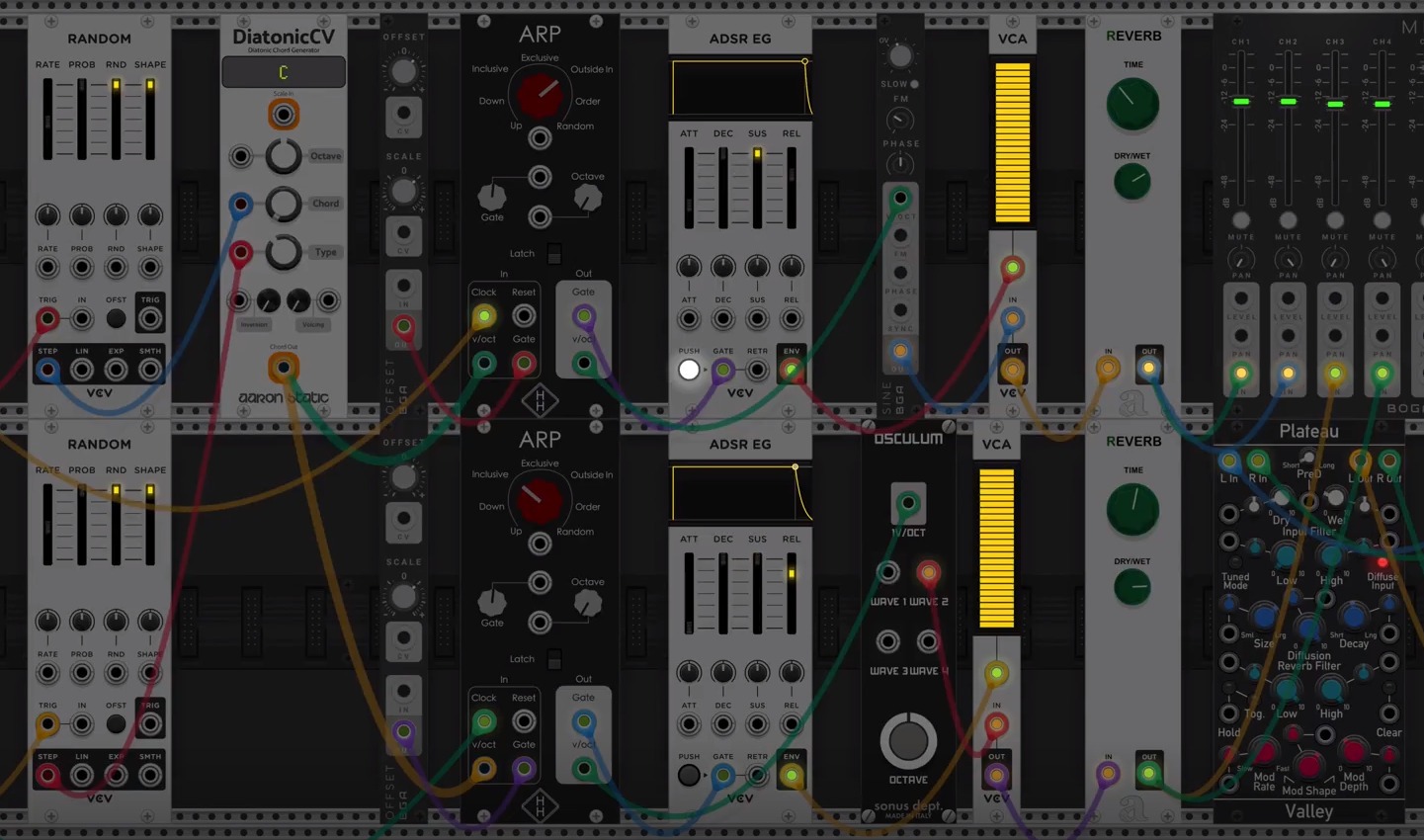
This unit provides in-depth training in the use of Digital Audio Workstations (DAWs), a core component of modern audio production workflows. It covers digital audio fundamentals, advanced editing and signal processing techniques using professional software such as Pro Tools, and explores the creative applications of Ableton Live in contemporary music production and live performance.
This unit focuses on professional sound capture techniques, including advanced microphone placement and stereo recording methods to achieve high-quality and immersive audio. It also covers studio recording and session workflows, concluding with an introduction to Foley artistry for the creation and synchronisation of realistic sound effects for multimedia.
This unit develops essential skills for on-set capture (location sound) and field recording for film and multimedia production. It focuses on dialogue recording using boom (perche) microphones, the creation and management of professional sound libraries (UCS), and advanced principles of radio frequency (RF) coordination for wireless audio systems.
This unit focuses on the technical installation and operation of Public Address (P.A.) systems, covering their basic tuning and calibration to ensure sound quality in public spaces. In parallel, it introduces the fundamentals of Lighting Control, detailing the DMX system, cabling, the operation of projectors, and the use of digital lighting consoles for shows and events.
This practical project focuses on the Editing and Mixing of audio for media, culminating in the Audio Post-Production and Delivery phase. Students apply techniques to create a professional stereo mix, ensuring the technical and aesthetic compliance required for final delivery across various media formats.
This Laboratory seeks to unify connections among the elements of the community. It is a meeting point and a place for exchanging experiences, a space dedicated to creativity where interdisciplinary practices are explored and developed, both inside and outside the school environment. Communication is the key element in this process. The laboratory aims to identify and mobilize trends, experiment with new ways of thinking and conceptualizing, and facilitate synergies among students. It is a laboratory that presents itself as a learning tool.
Our courses share content and present challenges with an international perspective. We prepare and support our students with best practices in mind, regardless of geography or nationality. For this reason, knowing English is a fundamental tool for breaking down barriers: gaining access to more references, discovering more professional contexts, and developing a portfolio aligned with the best work being produced, without borders.
This unit covers Adaptive Audio Design, focusing on creating sound that reacts dynamically to user actions and the game context. Students then learn Implementation in Middleware (such as Wwise or FMOD), integrating the creative audio elements into the game engine for a cohesive and interactive sound experience.
This unit focuses on advanced mixing techniques, refining balance, dynamics and spatial depth. It then addresses mastering and distribution standards, applying final processing such as limiting and dithering to achieve optimal loudness and audio quality in compliance with industry specifications across multiple delivery platforms.
This unit explores voice recording and post-production in different contexts. It begins with ADR, Dubbing, and Audiobooks, where students learn techniques for replacing dialogue in films (ADR), dubbing content into other languages, and the production of audiobooks. The second subunit, Podcast Production, covers everything from recording and editing interviews to sound design and mixing episodes, preparing the content for distribution.
This unit delves into the production of spatial audio, focusing on immersive mixing formats. It begins with Acoustic Calibration of Surround Studios, ensuring accurate monitoring. This is followed by Re-recording Mixing in Surround and the introduction
to Object-Based Audio, preparing students to create 3D soundscapes. The unit culminates with Immersive Mixing and Delivery, covering mixing techniques for Dolby Atmos and Binaural Audio, and the delivery standards for cinema and streaming.
This unit focuses on modern studio and live event infrastructure. Professional Audio Networks (like Dante or AVB) teach the transport of multiple digital audio channels via Ethernet. Synchronization (Timecode) covers the importance and methods of keeping all devices (audio and video) running in perfect temporal coordination.
This unit focuses on the management and delivery of live events, covering the preparation and interpretation of technical documents (riders) alongside leadership and communication skills needed for technical direction.
Technical Issues in Live Performances and Sound Mixing and Configurations cover sound engineering practices, system setup, FOH (Front of House) and monitor mixing, and rapid problem-solvingin a performance context.
This unit explores the technical and artistic requirements of audio outside traditional music production. Broadcast and LUFS Standards focuses on sound engineering for television and radio, with special attention to Loudness measurement (LUFS) and regulatory volume standards. The Sound for Arts, Theatre, and Qlab section introduces specific techniques for sound design, setup, and automation for live performances and artistic installations, using software like QLab for playback and control.
This unit delves into the application of audio in unconventional contexts, such as museums, galleries, and public spaces. Sound Systems for Museums and Installations explores the design and implementation of multi-channel and distributed audio systems that integrate with the space and the visitor’s experience. Sonic Interactivity and Prototypingaddresses the use of sensors and platforms like Arduino/Raspberry Pi to create works that react to the audience, focusing on programming and the development of specific hardware and software for sound art
This unit is the culmination of the program, where acquired knowledge is applied to a practical and comprehensive project. Development and Guidance of the Final Project focuses on the structuring, planning, and execution of the student’s central idea, providing methodological and technical guidance for the realization of a significant audio work. Technical Documentation and Professional Defense covers the creation of detailed reports, portfolios, and case studies describing the project, culminating in the presentation and oral defense of the work before a jury, simulating a professional context.
The objective is to prepare students for the project-driven dynamics of the creative industries, encourage teamwork, promote interdisciplinarity, foster a sense of responsibility and goal achievement, and also develop personal presentation and self-promotion skills. In this way, the school environment is brought closer to the reality of the professional world and its demands.
CERTIFICATION
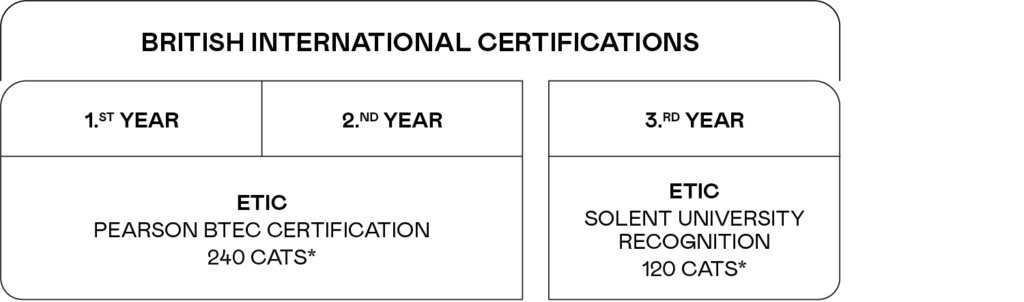
At the end of the second year, students receive the Pearson BTEC Level 5 Professional Certification (240 CATS*).
Certification follows the British education system; ETIC is not a higher education institution.
*CATS: Credit Accreditation Transfer System
teaching staff
PAULO ABELHO
Coordinator
PAULO ABELHO
Musician, Producer, Sound Director for Film and Director. Founder and co-owner of Estúdio Armazém do Bairro in Lisbon.
He has been a sound instructor since 1996.
Musician: Setima Legião, Cindy Kat, BCN, Golpe de Estado.
Producer: Rodrigo Leão, JP Simões, Mind da Gap, Diva, Danças Ocultas, Bernardo Devlin, Braindead, Flux, Daweasel, Daniel Bernardes, among others.
Sound Engineer: Extensive touring experience in Portugal and internationally, working with Rodrigo Leão, Sérgio Godinho, Rão Kyao, Ludovico Einaudi, Les Amazones d’Afrique, Melingo.
Sound Director for Film: Responsible for mixing numerous films and television series. Winner of the Sophia Award 2023 for Best Sound for João Botelho’s film “Um Filme em Forma de Assim.”
Founder and co-owner of Estúdio Armazém do Bairro, Lisbon.
Portfolio
Discography: Discogs
Sound Design and Music for Theatre: Teatro do Bairro
NUNO RUA
Tutor
NUNO RUA
Sound Designer, Sound Director for Film, Post-Producer, and Tutor at ETIC since 2014.
He directs, post-produces, and mixes projects with a particular focus on film and documentary television, including biographical works on Jorge Listopad, Eduardo Prado Coelho, Joana Vasconcelos, and Maria Gabriela Llansol.
He also collaborates with artists across multiple disciplines, such as the exhibition “Overflow” by Tadashi Kawamata at MAAT, and “A Tendency to Forget” by Ângela Ferreira at Museu Berardo — the latter winner of the BES NOVO FOTO 2015 award and now part of the Tate Modern collection in London.
ANDRÉ PRISTA
Programme Manager
ANDRÉ PRISTA
Producer, Musician, Composer, Sound Technician.
He formed his first band at 15 and acquired his first 4-track recorder at 17. His passion for music and sound engineering has been nurtured through a variety of personal and professional opportunities.
He has collaborated with renowned artists and engineers, including Bob Katz, Brian “Big Bass” Gardner, Dennis Ward, André Matos (Angra), Rafael Bittencourt, Henning Basse, and Akira Takasaki, among others.
PAULO FEIJÃO
PEDRO SOUSA
PAULO ABELHO
Teacher
PAULO ABELHO
Musician, Producer, Sound Designer, FOH Engineer, Sound Director for Film.
IMDB
NUNO RUA
RUI BENTES
JOSÉ RAPOSO
ANTÓNIO PINHEIRO DA SILVA
AFONSO NASCIMENTO
·ANDRÉ TENENTE
ANTÓNIO OLIVEIRA
ANTÓNIO PIRES
FRANCISCO LESTON
FREDERICO GRACIAS
IVAN NESKOV
JOAO ELEUTERIO
JOAO PAULO NOGUEIRA
JOSÉ AVELINO CASTRO PINTO
NELSON MILHEIRO
NUNO MOTA
PEDRO LESTON
TIAGO INUIT
WILL POWER
RUI LISBOA
NUNO MORÃO
MIGUEL SOTTO MAYOR
CAREER PATHS
- Sound Engineer in professional studios for recording, mixing, mastering, radio and television.
- Sound Designer specialising in recording and post-production for video games, film, theatre, advertising and sound installations.
- Live Sound Engineer for concerts and performances.
ERASMUS + & INTERNSHIPS
At the end of the programme, and subject to academic performance, students may apply for:
- an international internship through the Erasmus+ Programme;
- a national/international internship or job opportunities for industry placements with partner companies;
Applications are submitted through the Professional Integration Department (estagios@etic.pt).
ETIC provides a digital platform to communicate job offers and employment opportunities from partner companies.
FACILITIES
- Computer labs are equipped with individual Apple iMac workstations with headphones, audio interfaces and MIDI keyboards. Software used includes Pro Tools, Logic Pro and Ableton Live.
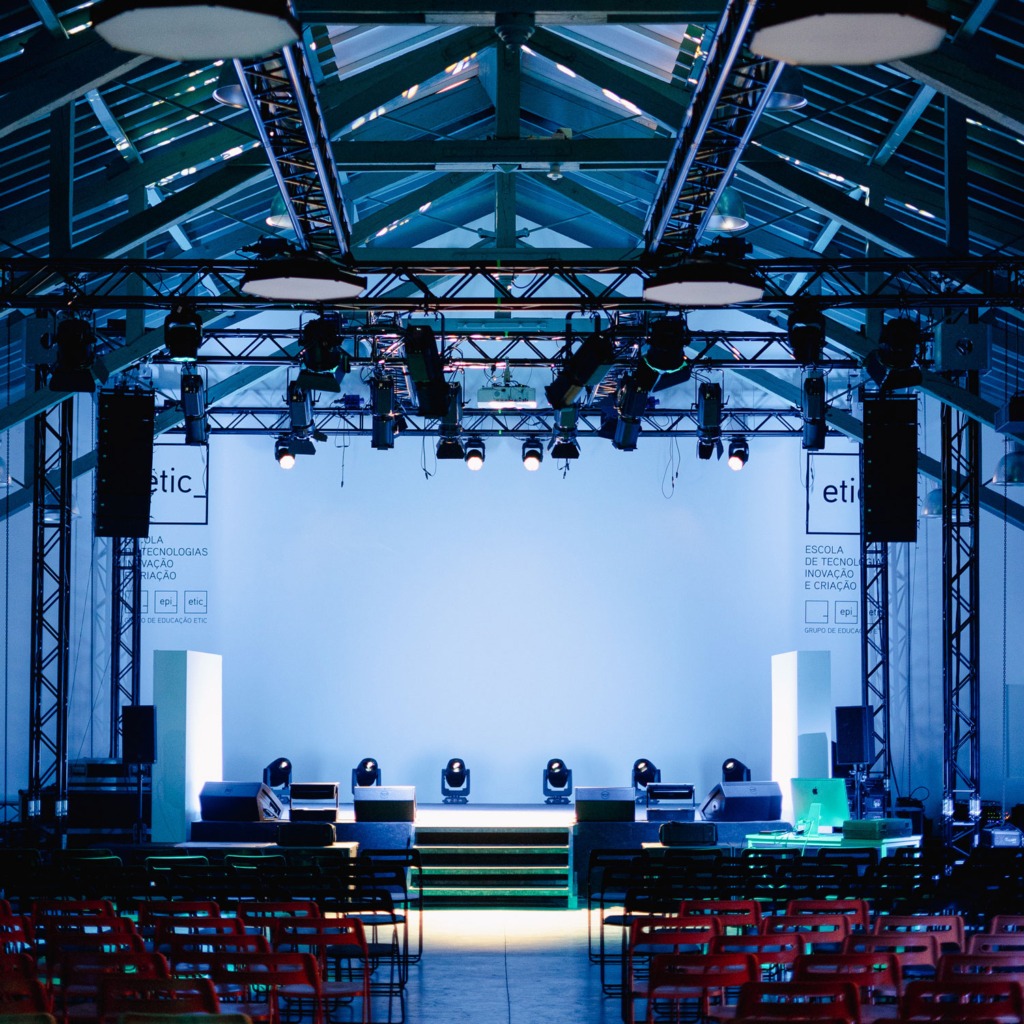
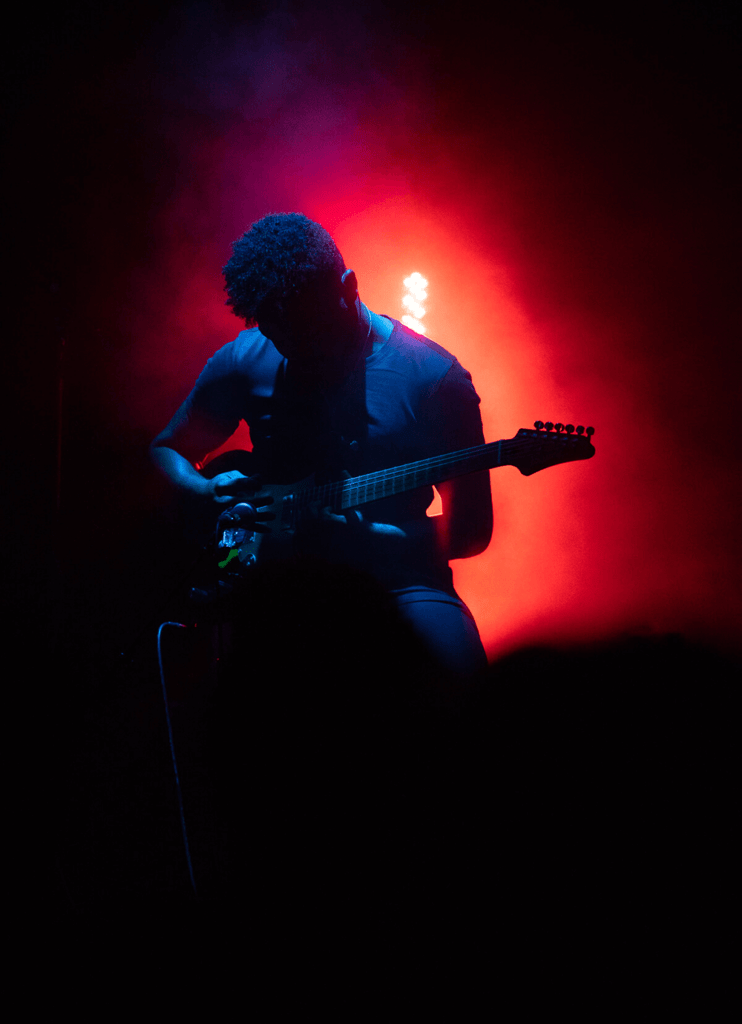
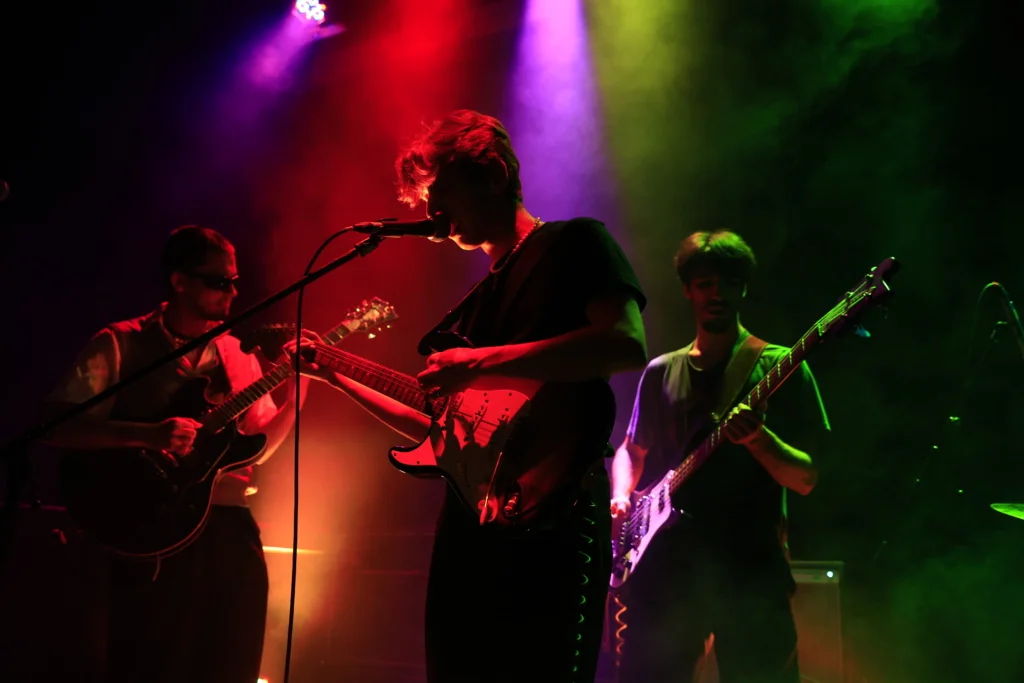
- Performance spaces include stages with PA systems and Pioneer DJ stations, alongside a range of musical instruments, including electric and acoustic guitars, electric bass, and acoustic drum kits (Fender, Stratocaster, Telecaster, Jazz Bass, Yamaha).
- Sound studios feature Universal Audio and Audient consoles, valve preamps, AVID Pro Tools HD, Ableton Live with plugins from Waves, FabFilter and UAD, and Genelec, M-Audio, and ADAM studio monitors.
- Mixing consoles include Midas, Allen & Heath, Behringer and Yamaha, with digital recorders (Fostex HD) and processors (Lexicon, TLAudio, SPL, Yamaha). Microphones include Neumann, Sennheiser, AKG, DPA, Shure, Sanken, Studio Projects, and portable recording equipment from Sound Devices, Tascam and Roland.
APPLICATION
The programme is delivered in English. Recommended english entry level: B1*
Requirements
– Submit a motivation letter, outlining reasons for applying and professional goals;
– Submit portfolio or showreel (not mandatory);
– Attend an interview.
How do I start my application?
– Fill in the form by clicking the APPLY button.
– You will receive an email with dates options for your interview.
*According to CEFR Levels . If you would like to take a free online test , please click English Test
TUITION FEES
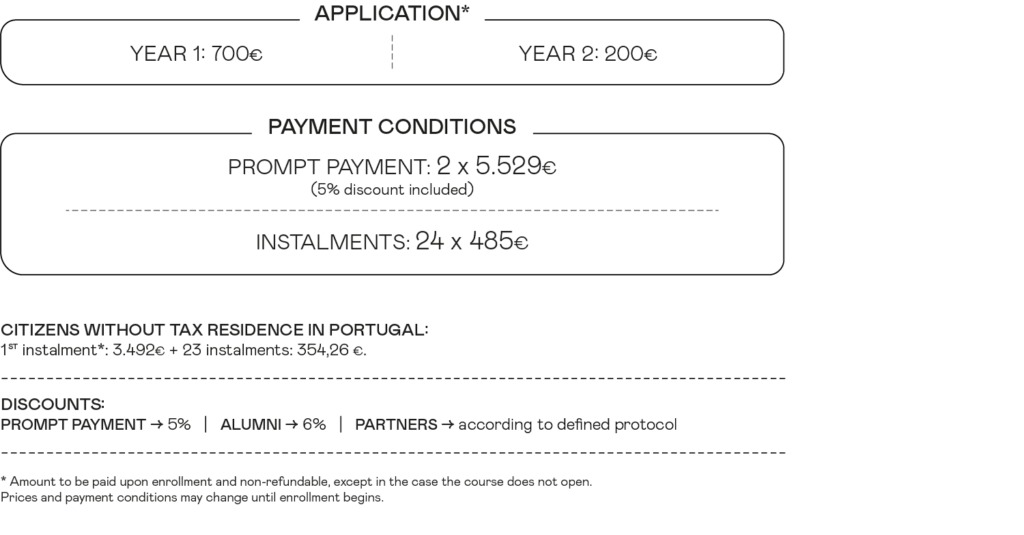
There are several financing programs in different banking institutions: Caixa Geral de Depósitos, Santander, Banco CTT, BPI, among others.
terms and conditions
The opening of each course, class or timetable is subject to a minimum number of enrolments. Enrolment in a specific timetable is limited to the number of available places. Teaching is on-campus and project-based. The course programme includes sessions without a tutor, dedicated to the development of independent exercises and project work. Independent and project-based work is essential to students’ learning progress. Tutors may require students to complete assignments outside scheduled class hours.
Occasionally, classes may be scheduled outside the regular timetable, for example to accommodate projects that require greater flexibility, specific equipment needs, real-world exercises developed with partners, or any other reason that supports the effective delivery of the programme.
Specific technical classes and/or workshops may take place on Saturdays.
The duration of each class may vary depending on whether it is theoretical or practical in nature.
Classes may be divided into smaller groups to enhance learning and intensify the development of projects and course content.
The curriculum and teaching staff may be subject to change for pedagogical reasons or due to circumstances beyond the school’s control.
For further information, please contact us.
The Sound Design for Live, Studio & Interactive Media course at ETIC is a specialised professional programme that trains the next generation of creative sound designers and technical sound directors. It blends artistic vision with technical mastery, preparing students to work across live events, studio production, broadcast media, immersive experiences and interactive platforms.
The Sound Design for Live, Studio & Interactive Media course at ETIC is designed for aspiring sound designers seeking a career in creative audio production across film, animation, video games, live events, and interactive media.
Technical professionals aiming to become technical sound directors, managing complex live or studio audio setups.
The Sound Design for Live, Studio & Interactive Media course at ETIC develops a comprehensive set of technical, creative, and professional skills, including:
1. Audio Production & Studio Skills
Recording musical ensembles, bands, and solo artists with advanced studio techniques.
Mixing multitrack audio, including immersive formats like Dolby Atmos.
Mastering audio for different distribution platforms.
Producing audio for broadcast, TV, and advertising.
2. Sound Design & Interactive Media
Creating soundscapes, Foley, and effects for film, animation, and documentaries.
Designing dynamic audio for video games, VR, and AR, with real-time responsiveness.
Crafting sonic environments for museums, installations, and immersive spaces.
3. Live Sound & Technical Direction
Operating PA systems for concerts, festivals, and events.
Designing sound for theatre, dance, and live performances.
Managing large-scale audio networks (Dante, AVB) and technical direction.
Leading teams, budgeting, and coordinating complex productions.
After completing the Sound Design for Live, Studio & Interactive Media course at ETIC, graduates are prepared for a wide range of professional roles across the audio and media industries. Key job opportunities include:
- Sound Engineer in professional studios for recording, mixing, mastering, radio and television.
- Sound Designer specialising in recording and post-production for video games, film, theatre, advertising and sound installations.
- Live Sound Engineer for concerts and performances.
As an international programme, English is used across all classes; projects and professional activities are set to prepare students for global experience, international collaboration and portfolio presentation within the industry.
Upon successful completion of the second year, students are awarded a BTEC Higher National Diploma, Level 5, carrying a total of 240 CATS credits*.
ETIC has been a Pearson BTEC Accredited Centre (Business and Technology Education Council) since 2016. The programmes have a duration of two years and are internationally recognised, enabling direct entry into the labour market as well as progression to further studies.
The programmes are assigned a qualification level by Ofqual (Office of Qualifications and Examinations Regulation) under the Regulated Qualifications Framework (RQF), which forms part of the UK qualifications system.