Overview
It is a year of study progression for students who have finished 2 year courses in Music and Sound areas/Pearson BTEC international certification, and also for other students whose equivalence can be granted. Certified competence in the English language is required.
This course aims to develop a broad range of creative skills in music and production, carefully balanced with academic expertise involving research, reflective and critical thinking. In doing so, students will gain experience specific to the music industry and transferable life skills
relevant to other careers.
GUIDANCE FOR AN INTERNATIONAL CAREER
This 3rd year’s programme will deepen knowledge and skills and prepare the student for an international career in the areas of music production and sound.
A CREATIVE ENVIRONMENT LINKED TO THE INDUSTRY
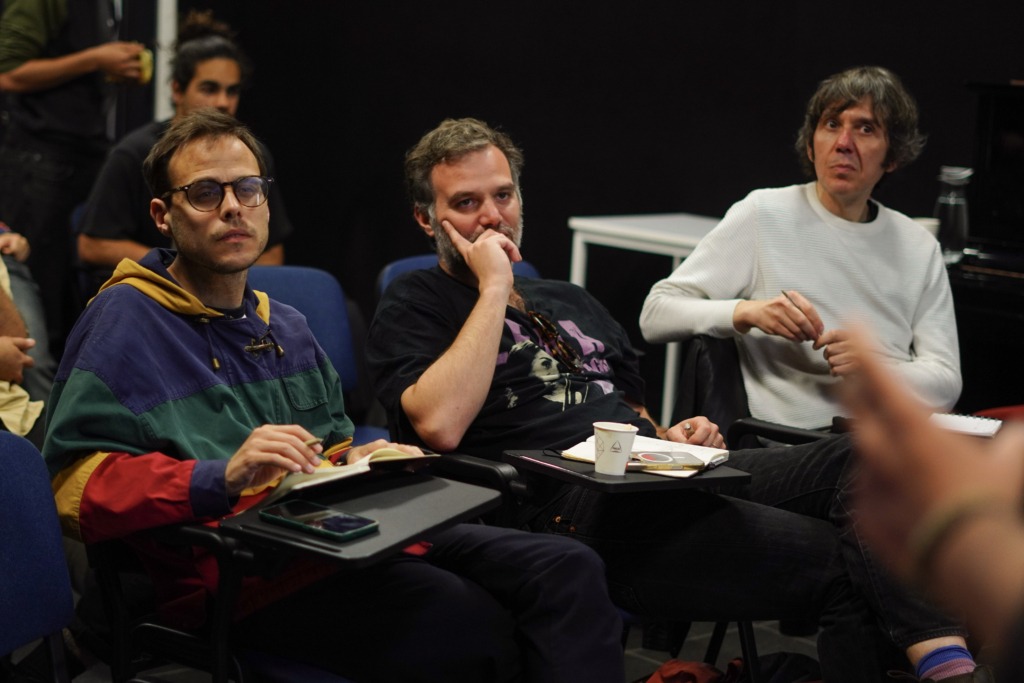
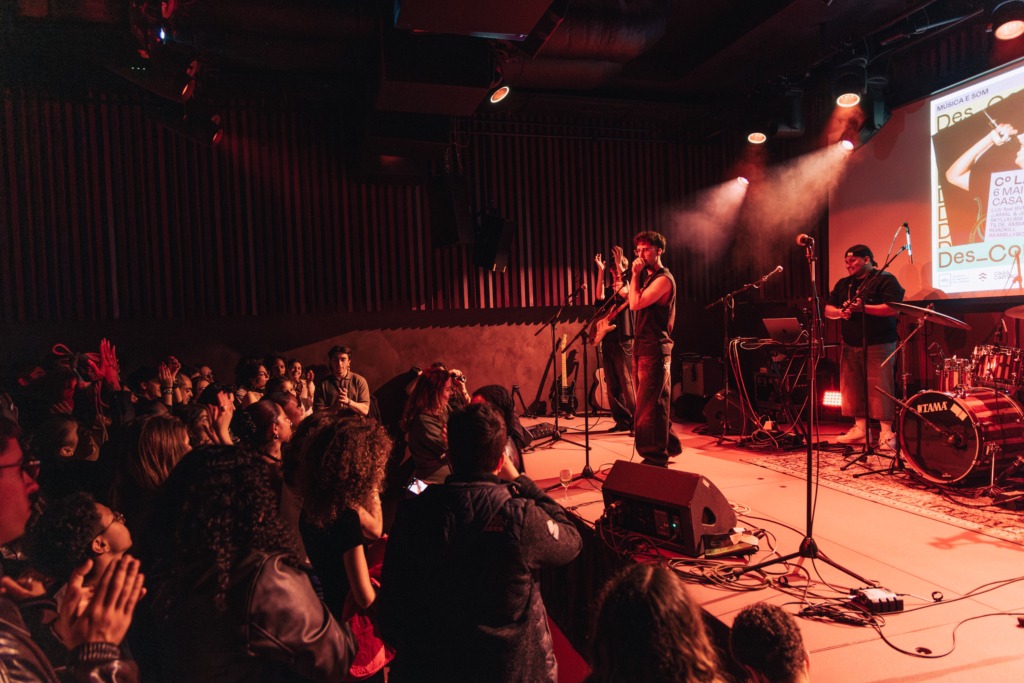
ETIC is also recognized for its creative environment and the proximity between students, teachers and staff. There is a close connection with the professional environment that results in partnerships with companies and institutions. Real briefings and creative challenges with professional positioning are part of the curricular projects. The school regularly promotes the possibility for students to participate in events and festivals where they practice, side by side, with the school team and sometimes with experienced professionals and mentors.
PROGRAMME
Requirements: 240 CATS and English Level B2
Students from other schools whose equivalence can be granted can also enter and attend this 3rd year.
You will experience recent and emerging technological developments including 5.1 surround sound and Dolby Atmos. The issues in mixing music and film sound will be examined and you will learn how to achieve effective mixes in these formats.
You will examine how to approach collaborative projects in a manner that suggests professionalism and inspires those around you. Teamwork will be key, you will need to develop your ideas, present a proposal and realise your project in a negotiated group context.
A key emphasis of the module is to give you confidence to approach projects as a team by synthesising and developing knowledge, skills and previous experience. Example projects could include, but are not limited to, recording projects, music networking and dissemination projects, composition or music creation projects, live events, community music projects, hybrid and combined projects.
As well as advanced production techniques such as mastering, this module will examine how you can solve practical production problems and present your findings in a video or interactive format designed to train others.
You will study and practise prescribed techniques such as music reading skills, technical exercises, professional practice, performance skills and repertoire. You will also be encouraged to develop skills of your choice, with tutor guidance, in order to be able to create music in a variety of styles and create your own musical pathways.
In addition, you will learn how to create and present a show-reel that demonstrates your artistic and technical skills.
You will further develop and enhance a range of research perspectives, practical skills and theoretical knowledge gained across the curriculum. The teaching in the module will focus on developing methodologies that can aid a combination of creative, technical, professional and academic research.
CERTIFICATION
Solent University recognises the 3rd year of ETIC training and grants an equivalence corresponding to the 3rd year in the British educational system (Level 6 – 120 CATS*).
Certification obtained at ETIC is awarded by the British education system, and ETIC is not a higher education institution.
*CATS: Credit Accreditation Transfer System
TEACHING STAFF
MIGUEL ÂNGELO
ETIC Link Tutor and Module Leader
MIGUEL ÂNGELO
In 1984 Miguel was the founder of the band Delfins. Delfins was a Portuguese pop-rock band from Cascais that achieved a lot of success in the 90’s, breaking barriers in record selling and tours. Miguel was, for 25 years, Delfins singer, author and composer.
In 1991 was one of the founders of the successful collective Resistência, an acoustic group with different musicians from different bands and musical styles.
In 1993 he opened 1 Só Céu studios where a lot of famous Portuguese records were recorded and mixed.
In 1995 he started a TV career in music related shows, including Channel 1’s “Miguel Angelo ao Vivo” where Portuguese and foreign bands performed live and were interviewed by him.
In 1996 he was the voice of Woody in “Toy Story”, by Pixar. He was also responsible for adaptation, musical direction and performance. He repeated the experience in “The Hunchback of Notre Dame” and “Goofie – the Movie”, and can also be heard speaking and singing in “Pocahontas”, “Hercules”, “A Bug’s Life” and “Treasure Planet”.
In 1997 he was the producer of African Voices’ “Venha Celebrar”.
In 1998 he composed the soundtrack for two hit movies, “Adeus, Pai”, by Luis Filipe Rocha and “Zona J” by Leonel Vieira. He also launched his first novel, “A Queda de um Homem”, and by 2011 he had already 5 novels and his 25th year career autobiography released.
In 2004 he opened Lotus club in Cascais, a venue for live music supporting new bands.
2009 was the year of the farewell tour of Delfins, with sold out shows nationally and internationally.
In 2011 he produced the debut album from Os Lábios.
In 2012 he started a ongoing solo career, and reformed his collective project from early 90’s, Resistência, that are now touring Portugal and abroad with huge success.
In 2024 Delfins reunited for a 40th year Celebration, first in a sold out Meo Arena (Lisbon) and then for a Tour that is still travelling the country and abroad.
JOÃO GOMES
ETIC Link Tutor
JOÃO GOMES
João began classical piano studies at Academia de Amadores de Música (1988–1992), followed by jazz piano at Hot Clube de Portugal (1989–1992). In 1998, he earned a Diploma in Audio Engineering from SAE London.
As a keyboardist and musician, he has performed and recorded with prominent Portuguese artists and bands, including Miguel Angelo, Delfins, Polo Norte, Rita Redshoes, Mazgani, JP Simões (Bloom), Fernando Cunha, and the Luta Livre project led by Luís Varatojo. He was also a member of LX90, Kick Out The Jams, The Offshores, and The Millions.
João’s production, mixing, engineering and keyboard playing work includes co-producing Coisas Simples (Maria Leon), Sweet (Alibi), Babilónia (Delfins), Fade to Shade (Nicole Eitner), Mudam-se os Tempos (Ar de Rock) and Cada Qual Na Sua Mente (Sogranora). He mixed and played keyboards on Ana Stilwell’s Life Trip. He also contributed keyboards to Nena’s hit single “Portas do Sol”—as part of an ongoing series of collaborations with Estúdio Zeco and João Só—which was later certified Triple Platinum in Portugal.
As a sound engineer, he recorded with Vitorino, collaborated with Fortress Studios in London, and works regularly with Blim
Records—a Lisbon-based production team and studio led by Ricardo Ferreira and Rui Ribeiro.
From 2008 to 2011, he served as Country Manager for Nokia Music Store Portugal, during a key phase in the shift to digital music distribution.
Since 2013, João has been a tutor at ETIC for the 2-year Higher National diploma in Music Creation & Production course and coordinates the Electronic Music course. He is also part of the Erasmus+ team developing a Hip Hop and Rap curriculum for prisons and probation centres across Europe.
In 2023, João launched his solo project Turista, with a debut album blending downtempo,electronic textures, and songwriting.
MANUEL FARIA
Module Leader
MANUEL FARIA
Basic education at Liceu Pedro Nunes and Instituto Superior Técnico in Electronic Engineering till the 4th year. British Council PB in English Studies.
In 1976 founded “Trovante”, where he was pianist and producer.
He worked Sérgio Godinho, Mafalda Veiga, Entre Aspas, José Afonso, Carlos Zel and Amália Rodrigues, among others. In 1994, he led the production of “Filhos da Madrugada”, a tribute to José Afonso.
Later, especialized in music for the communication and marketing business, his main activity for more than 25 years. In 96, he created his own Post-Production and Music composition house, Índigo, which was awarded the “Best Sound Production Company” prize for 16 years in a row.
As a composer, he created the music for the Portuguese Pavillion at Expo’98 at Expo’00 in Hannover.
He composed theatre music for “Conversa da Treta”, “Pop Corn”, and “O Crédito” and for the TV Show “Paraíso Filmes”. With Frankie Chavez, he composed the film score for “Pare, Escute, Olhe” by Jorge Pelicano.
From 1999 to 2007, he was member of the directory board of SPA (Portuguese Authors Society).
Passionate about sound in spaces and its impact in people, in 2010 he created the sonic architecture the Bilbao Museum of Techonology.
Also in 2010, he created the Vodafone Sound Experiences for cinema, which were used as a demo for Dolby™, 7.1 e Dolby Atmos. He received several awards for his work, including two Cannes Gold Lions and Silver and Bronze at the London International Awards.
He his member of the Advisory Board of The Adventure Lab Copenhagen, Denmark.
He has devoted his free time to the sound reserarch, immersive audio and Branding, being an active member of the Audio Branding Society.
He created the Blog “The Sound Adventure”.
He is co-author of the book “Storytelling Beyond the Screen” released by EU Interrreg VB North Sea Region.
He colaborated in the contruction of SCM, Sociedade Caboverdiana de Música, when he acted as an author’s rights consultant.
He thaught “Music Production” at Escola Superior de Música de Lisboa and presently teaches “Music for Picture” at World Academy in Lisboa.
He was keynote speaker at several conferences like the Networkone Latin Summit in São Paulo, Brazil, Cannes Lions, SAWA congress in Sydney, Eurobest and TEDx in Lisbon, and IndieSummit in London, MAPIC in Cannes and TEA SATE in Paris in 2019.
LUÍS NUNES (BENJAMIM)
NUNO FERNANDES
Module Leader
NUNO FERNANDES
Music in Boston, USA, graduating in 2009 with Summa Cum Laude. After living in Los Angeles and working at the American Music Awards at the GRAMMYs, Nuno moved to London in late 2011 and back to Portugal in the summer of 2018. Since then, he has been freelancing with artists on both sides of the Atlantic.
His credits include: Bryan Adams, Procol Harum, KT Tunstall, Pete Brown and Phil Ryan, Curved Air, London Grammar, Elisa, Rita Redshoes, Tainá, Diana Castro, Fernando Cunha. https://www.nunof.com/
EDUARDO VINHAS
Module Leader
EDUARDO VINHAS
Producer and sound engineer at self-owned Golden Pony Studio since 2005. Worked in various projects as a musician and producer (Jaguar, Pop Dell Arte, B-Fachada), and also as a recording, mixing and mastering engineer.
2005-2017 Owner/Producer/Sound Technician at Golden Pony Studios Lisbon
Works in various projects as musician, producer, recording, mixing and mastering engineer.
2010 – Masterclasses with Andy Wallace and Peter Katis at Studios La Fabrique, France.
2003 – Studio Assistant at Régie Studios.
CAREER PATHS
KNOWLEDGE OF MUSIC AND SOUND INDUSTRY.
The student explores content and themes that facilitate a broad and transversal understanding of this industry. The course allows you to acquire the knowledge and skills necessary to develop a successful activity in the different areas of this sector.
Teachers are active professionals in permanent contact with the work environment. They regularly invite experts and artists to share their experience and give feedback on projects.
ERASMUS+ & INTERNSHIPS
At the end of the programme, and subject to academic performance, students may apply for:
- an international internship through the Erasmus+ Programme;
- a national/international internship or job opportunities for industry placements with partner companies;
Applications are submitted through the Professional Integration Department (estagios@etic.pt).
ETIC provides a digital platform to communicate job offers and employment opportunities from partner companies.
FACILITIES
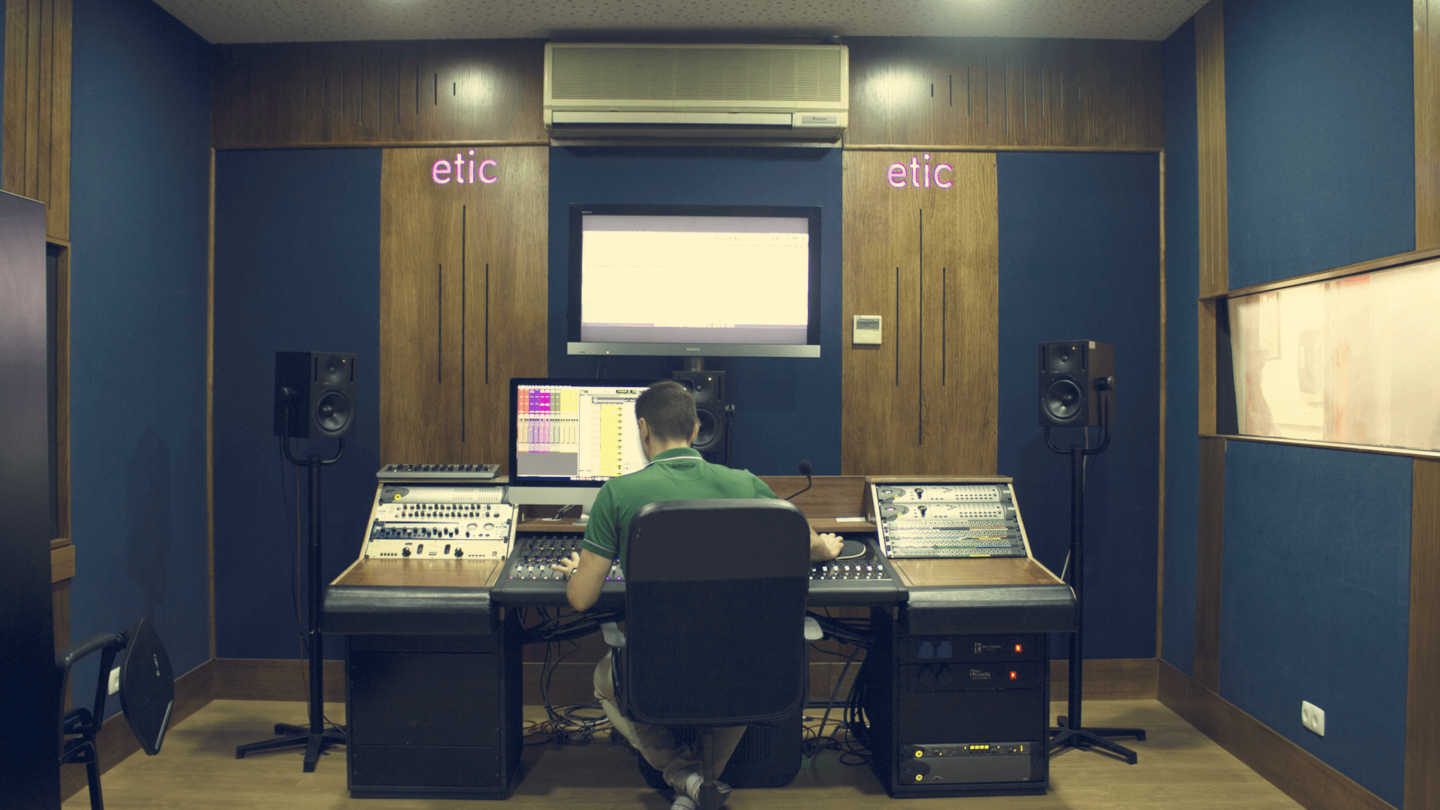
ETIC is a school equipped with state-of-the-art technology, tailored to meet the specific demands of each area of study and industry:
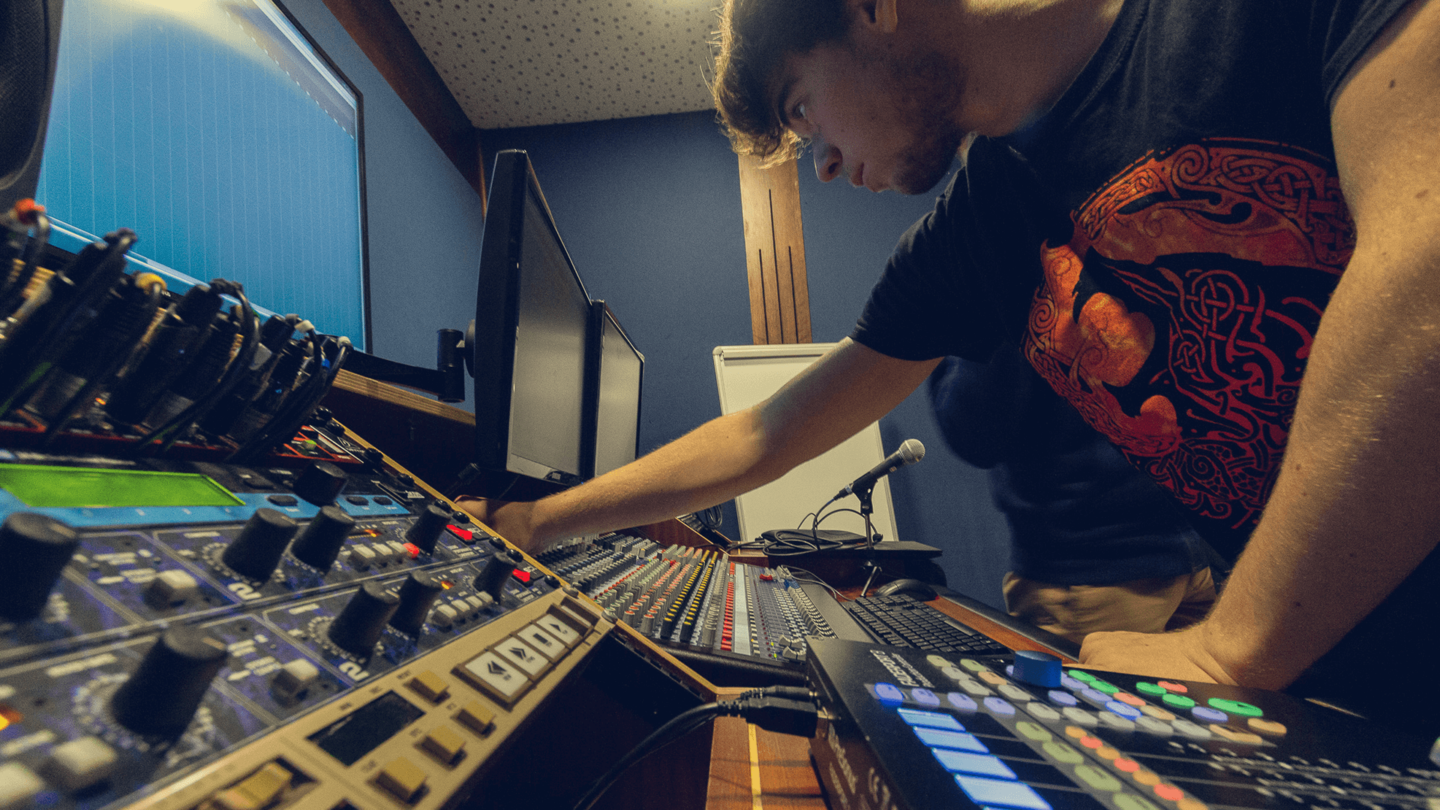
- 2 Sound Studios equipped with Universal Audio, Audient, Tube Pre-amps, AVID Pro-Tools HDX systems, Ableton LIVE (Waves, Fab Filter and UAD plugins). AVID S6 and S3 controllers, Genelec, Adam, M-Audio sound monitors.
- Mixing tables (Midas, Allen & Heath, Behringer and Yamaha). Fostex HD digital recorders, processors (Lexicon, TLAudio,SPL, Yamaha). Microphones (Neumann, Sennheiser, AKG, DPA, Shure, Sanken, Studio Projects). Portable recording equipment (Sound Devices, Tascam and Roland).
Concert spaces with stage, PA and Pionneer DJ stations.
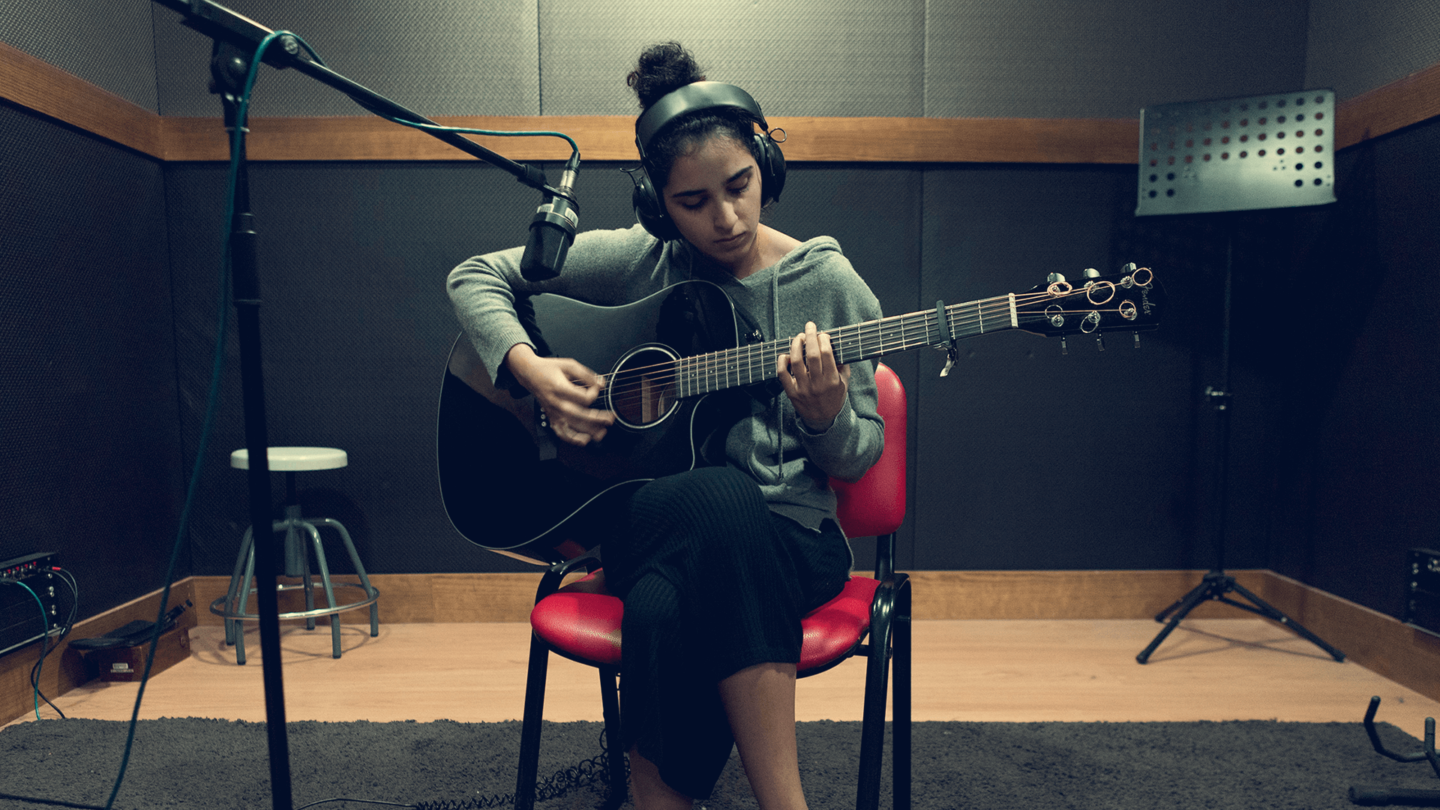
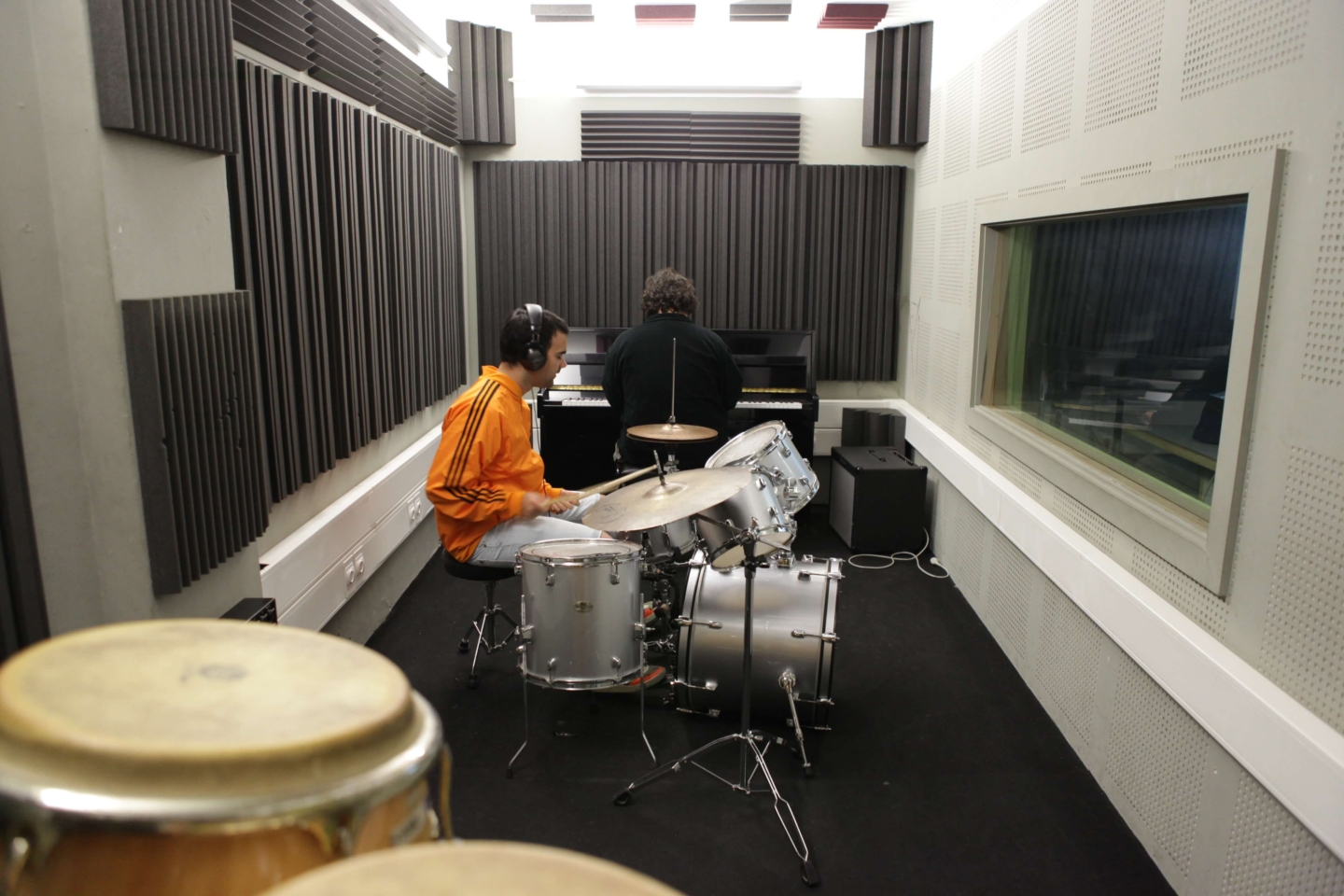
Musical instruments: electric and acoustic guitars, electric bass, acoustic drums (Fender, Stratocaster, Telecaster, Jazz Bass, Yamaha).
APPLICATION
The programme is delivered in English. Recommended english entry level: B1*
Requirements
– Submit a motivation letter, outlining reasons for applying and professional goals;
– Submit portfolio or showreel;
– Attend an interview.
How do I start my application?
– Fill in the form by clicking the APPLY button.
– You will receive an email with dates options for your interview.
*According to CEFR Levels. If you would like to take a free online test , please click English Test
TUITION FEES

There are several financing programs in different banking institutions: Caixa Geral de Depósitos, Santander, Banco CTT, BPI, among others.
GENERAL TERMS AND CONDITIONS
The opening of each course/class/schedule is subject to a minimum number of registrations. Registration at the desired time is limited to the number of places available.
Teaching is face-to-face and project based. The course program includes classes without a teacher to develop autonomous exercises and design practices. Autonomous or project work is important for the student’s progress in their learning. Teachers can request the development of work outside the established class hours. Classes may occasionally be scheduled outside of established times, for example to respond to projects that require this flexibility, to meet project-specific equipment needs, to respond to exercises carried out in a real context with partners, or for any other reason that supports the better achievement of the programme.
Specific technical classes and/or workshops can take place on Saturdays.
The duration of each class may vary depending on its theoretical or practical nature.
The class can be divided into groups for better learning and intensification of the development of projects and subjects.
The curriculum and the list of course teachers may be changed for reasons of pedagogical suitability or for reasons of force majeure.
For more information contact us.
Portfolio


What are the requirements to apply for a course at ETIC?
Applying to ETIC is accessible and flexible. Usually, we consider:
- Certificate with 240 CATS or 120 ECTS
- English test: Duolingo, IELTS or TOEFL (with the required minimum scores from one of the following tests):
- Duolingo (minimum overall score of 115, with at least 95 in each component)
- IELTS 6.0 (minimum overall score of 6.0, with at least 6.0 in Writing and 5.5 in Reading, Listening and Speaking)
- TOEFL iBT (minimum overall score of 80, with at least 20 in each component)
- Portfolio
- Motivation letter
- Letter of recommendation
- Interview
- More than formal criteria, we value potential and commitment to learning.
How does the application process work?
- Start your online application (Apply button) via the course page
- Application process starts with submission of documents
- Interview with the Course Coordinator (for external applicants)
- Submission of administrative documents to ETIC
- Final decision and confirmation of place
Are there specific application deadlines?
Yes, the application phase ends on 31st of August 2026.
Early application is recommended due to high demand and a maximum class size of 18 students.
What types of courses does ETIC offer?
International Certification Courses – lasting 2 or 3 years, allowing you to obtain a professionally recognised qualification at both global and academic level
Annual National Certification Courses – lasting 1 academic year, providing training that prepares you for a future profession, recognised within the industry
Semester-based National Certification Courses – lasting one semester, ideal for those seeking certified training to explore a new career path
Specialisations – certified training lasting one semester, for those who already have some knowledge and wish to deepen their expertise
Workshops – highly specific short-term training, up to a maximum of 40 hours
Tailor-made training – customised training plans
Are classes more practical or theoretical?
The methodology is highly practical, based on a “learning by doing” approach. This involves a strong practical component, sometimes in real work environments, guided by professionals actively working in the industry. The third year requires a high level of student autonomy.
Is knowledge of English required to study at ETIC?
Students wishing to enter the third year of international certification courses must provide proof of English proficiency at B2 level by presenting one of the following:
- Duolingo (minimum overall score of 115, with at least 95 in each component)
- IELTS 6.0 (minimum overall score of 6.0, with at least 6.0 in Writing and 5.5 in Reading, Listening and Speaking)
- TOEFL iBT (minimum overall score of 80, with at least 20 in each component)
Does ETIC support career integration?
Yes. The school has a Professional Integration Office which:
Supports CV and portfolio development
Shares internal job opportunities
Establishes partnerships with companies and studios
Which companies recruit ETIC students?
Primarily creative agencies, audiovisual production companies, design studios, fashion companies, video game studios, music and technology companies, among many others—some of which have partnerships with ETIC.
Do students find jobs easily?
Employability rates are high in creative and technological fields, thanks to the strong practical component and the portfolio developed.
ERASMUS+ Programme
ETIC offers a mobility programme that allows selected final-year students to undertake internships in various European countries.
Access to funding is granted through an application process, with selection based on project quality and academic performance.
Are ETIC courses recognised?
Internationally, ETIC is accredited by PEARSON BTEC, awarding a Level 5 qualification (240 CATS) upon completion of two-year courses.
Solent University recognises ETIC’s third year of study and awards equivalence to a Level 6 qualification (120 CATS) in the UK.
CATS: Credit Accumulation and Transfer Scheme
What are the tuition fees?
Fees vary by course and include:
- Application fee
- Enrolment fee
- Annual tuition fee
Can I pay in instalments?
Yes, we offer several flexible payment options.
Does ETIC offer scholarships?
Yes:
- Internal merit-based scholarships
- Partnership scholarships, Zona II, Sara Carreira Scholarship, Vo’Arte Scholarship
What resources does ETIC offer?
- TV studios and OB Van (outside broadcast vehicle)
- Design laboratories
- Sound and music studios
- Fashion workshops
- Coworking spaces
Is there any support for international students?
Yes. During the application process and following acceptance, students of non-Portuguese nationality (or those residing outside Portugal) will be supported by the International Student Office.
The aim is to guide and assist international students throughout their integration, particularly in relation to the “Life at ETIC and in Lisbon” experience. This includes recommendations on accommodation, transport, cultural programmes, and social and cultural integration.
Contacts: international@etic.pt / (+351) 213 942 140
Where is the school located?
In the centre of Lisbon, near Cais do Sodré, at Rua D. Luís I, numbers 6 and 20, with easy access to public transport (metro, bus and train just a few minutes away).
Can students use the studios for personal projects?
Yes, subject to booking and internal approval.
Are final projects presented publicly?
Yes, through exhibitions, film screenings, fashion shows, showcases and digital portfolios.