Overview
It is a year of study progression for students who have finished 2 year courses in Film & Television area / Pearson BTEC international certification, and also for other students whose equivalence can be granted. Certified competence in the English language is required.
The course offers an effective combination of research, critical analysis, design and professional practice, and allows the improvement and knowledge of methodologies necessary for an international career.
The area of Film and Television is an extraordinary field of ever-new possibilities for contemporary study and creation and for the production of innovative businesses.
The student can develop the knowledge acquired and expand their creative, technical and professional potential over the course of a year. At the same time, you will become part of a worldwide community of students, accompanied by teachers and guests who share current and future references.
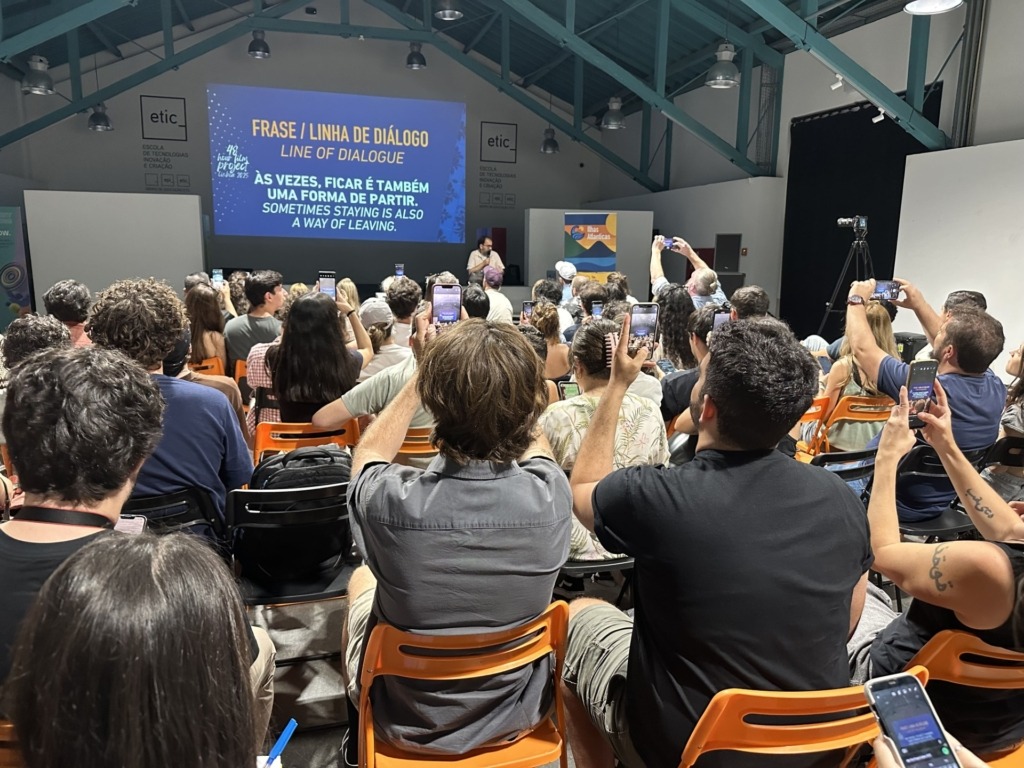
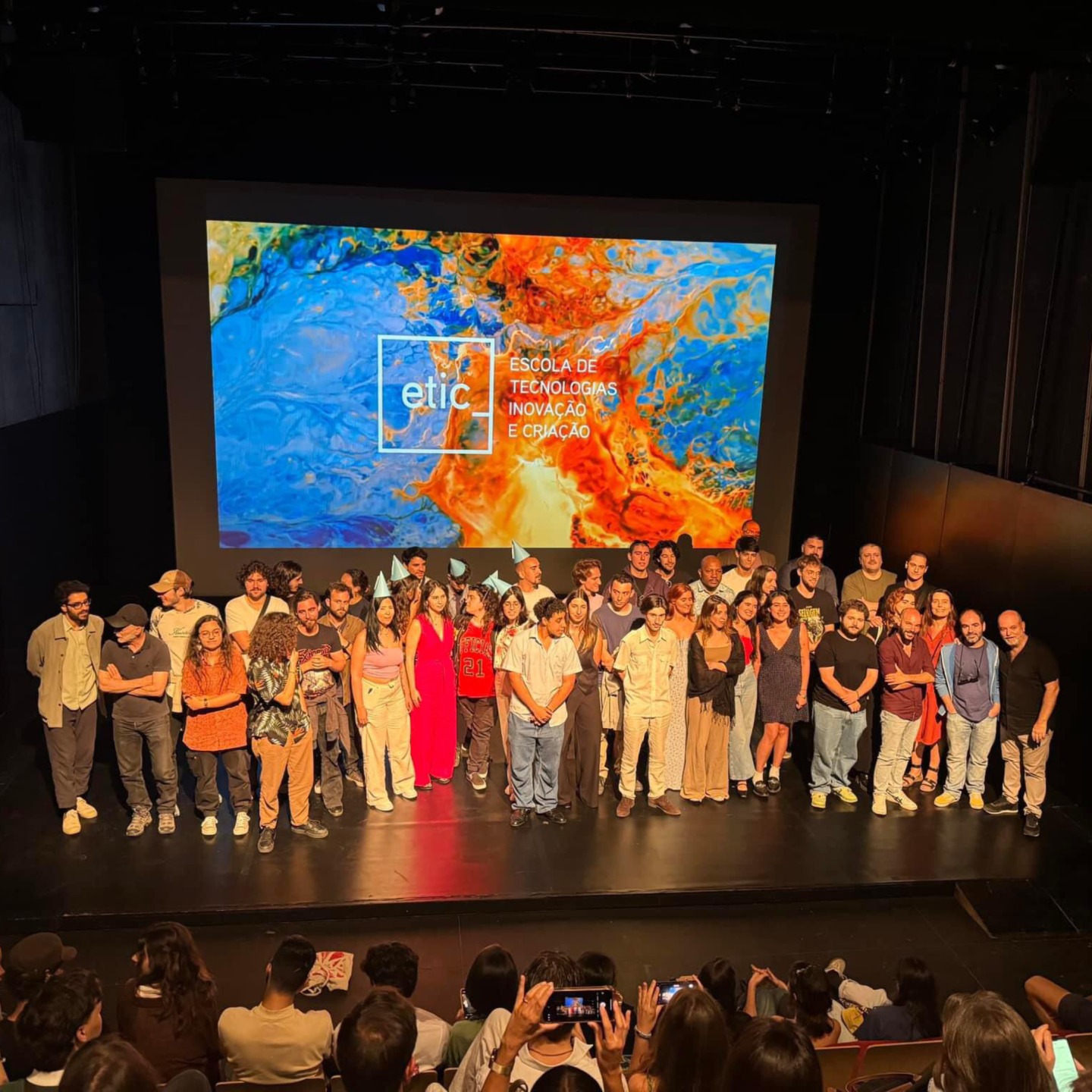
The School’s objective is for student to be prepared to successfully overcome the challenges that lie ahead, promoting relationships with the community, companies and institutions. ETIC encourages student talent to strengthen their relationship with professionals. At the end, the projects are presented at Cinemateca Portuguesa.
GUIDANCE FOR AN INTERNATIONAL CAREER
The student deepens knowledge and skills, both technical and creative, to obtain the necessary preparation for an international career and develop a successful activity in the Cinema and Television industry.
A CREATIVE ENVIRONMENT LINKED TO THE INDUSTRY
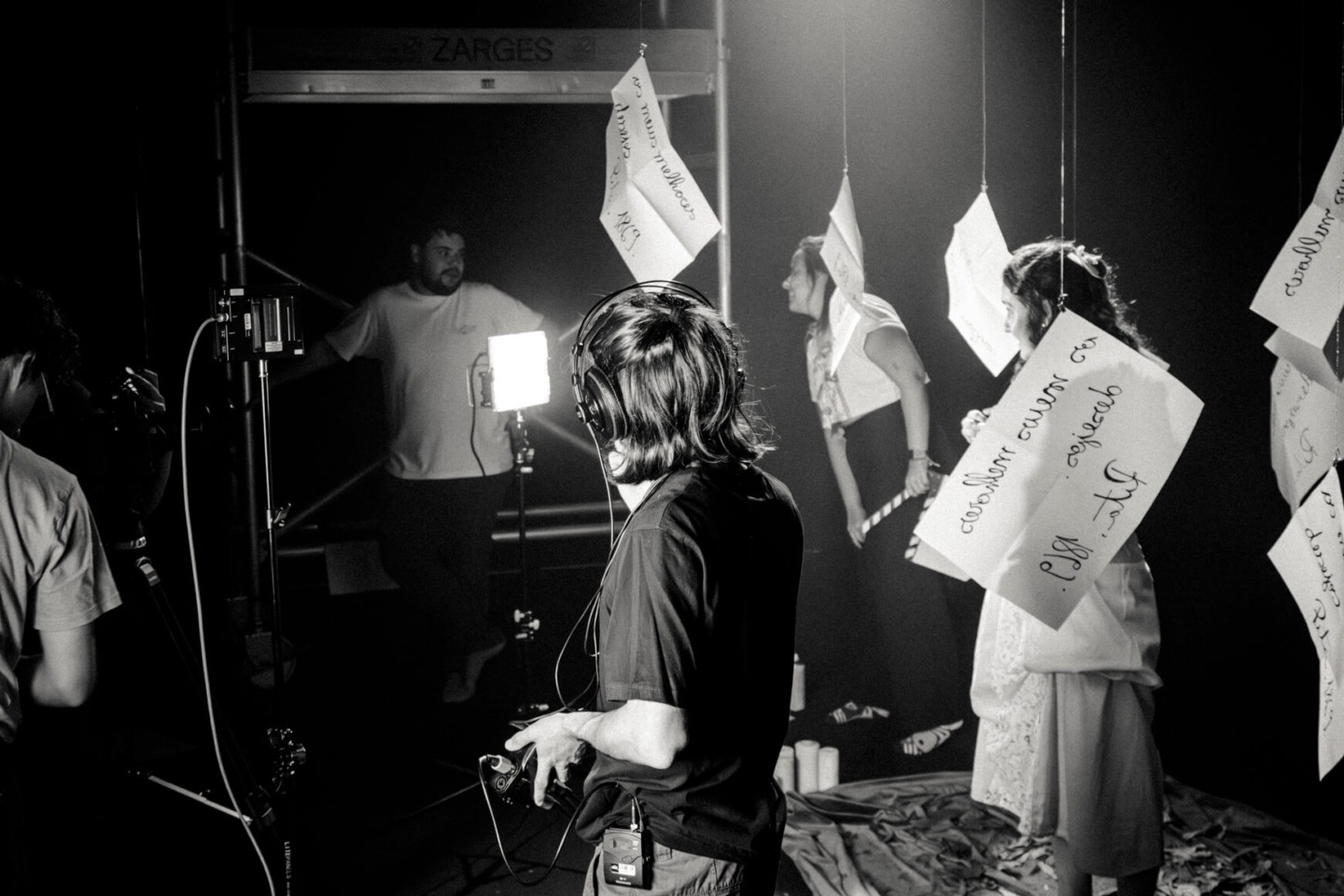
ETIC is also recognized for its creative environment and the proximity between students, teachers and staff. There is a close connection with the professional environment that results in partnerships with companies and institutions. Real briefings and creative challenges with professional positioning are part of the curricular projects. The school regularly promotes the possibility for students to participate in events and festivals where they practice, side by side, with the school team and sometimes with experienced professionals and mentors.
PROGRAMME
Requirements: 240 CATS and English Level B2
Students from other schools whose equivalence can be granted can also enter and attend this 3rd year.
On this module you will analyse and debate social, political and cultural contemporary issues, relating them with the contribution screen has to such analysis and debate. To do so, you will learn how to critically think about concepts and approaches that characterize contemporary culture. You will be challenged to uncover how our identities shape screen culture and are shaped by it, exploring representations and impacts that some topics have in this mutual relation between our contemporary selves and the screen.
You will develop your skills and competences on research applied to these questions present in our cultural context, producing analysis of film and television case studies.
Production, distribution, exhibition and consumption of film and television in the global age is the main theme of this module. You will emerge in contemporary film and television studies, through a range of dynamic topics, debates and screenings considering some of the most important and critical issues that circulate contemporary film and television markets around the world. You will analyse and reflect about globalization and cultural centralization, in a local and global perspective. Promoting reflection and critical thinking, you will be challenged to create an original and independent line of research, considering team and collaborative work in a project for a screen festival in the global age.
This module is about yourself, specifically about your ability to recognize and reflect on the skills you have at this point of your academic life. The goal is to enable you to be capable of deciding the best ways to communicate those skills to a potential employer in the creative industries and beyond.
You will make and present a portfolio that reflects your skills and yourself, promoting your self-awareness and critical thinking approaches to your own work. Your reflections will be important in identifying strengths and weaknesses in a way that can allow you to promote a career plan and develop goals and objectives. You will also learn how to plan, research and share your portfolio looking for professional development and determination of your own career objectives.
This module is the starting point of your Final Major Project. Here you will produce the research base that will support the development of your Final Major Project. You will develop your research skills at the same time you will be challenged to arouse critical and analytical thinking that will turn theoretical concepts and investigation into a practical instrument to develop your project.
You will learn how to conduct research and research methodologies to widen your knowledge and understanding of your chosen subject for the Final Major Project. With the outcomes of this research, through the critical analysis of a wide range of sources, you will determine your own perspective to apply in Final Major Project work.
From the outcomes of Final Major Project Research, in this module you will create your final project. It can be a written or a production-based project (dissertation, script, fiction, documentary, television pilot). This will be the culmination of your journey in the top up year, and should reflect your knowledge, understanding and skills around film and tv from the last three years. This project is a demonstration of critical, creative and professional skills by exploring and deepening the subject of your research, turning it on a practical and technical work, according to film and tv professional practices. You will undertake this project to aim the same goals (such as pitch, publication or production) you can find in the industry.
CERTIFICATION
Solent University recognises the 3rd year of ETIC training and grants an equivalence corresponding to the 3rd year in the British educational system (Level 6 – 120 CATS*).
Certification obtained at ETIC is awarded by the British education system, and ETIC is not a higher education institution.
*CATS: Credit Accreditation Transfer System
TEACHING STAFF
PEDRO SENNA NUNES
ETIC Course Leader
PEDRO SENNA NUNES
I lead festival and culture programmes linked with cinema, dance, media, performance and technology. I started teaching 25 years ago, and have been at ETIC since 1997. I have worked in the school as a coordinator of the image and sound department and as a creative director for a significant number of years. I currently teach in the film making field – Cinema, Performance and Media degrees. Units taught include ‘Documentary Film, ‘Film Making’, ‘Creative Process’, ‘Body and Technology’, ‘Video Dance’ and ‘Experimental Film’. For many years I co-supervised final film projects, presentations and debates with students in a national and international context. I really like the exercise of shooting and editing images and sounds in a real experimental way. I regularly go to the theatre, contemporary dance and music performances and I dedicate all my free time to my actual research between movement images and performing arts. I love spending time in the countryside and near the ocean, learning more about the aesthetical impact of nature. Essentially, I love travel and discovering the strong details that change my surroundings.
FABRÍCIA VALENTE
Module Leader
FABRÍCIA VALENTE
Fabrícia Valente is a PhD researcher at Architecture of Contemporary Metropolitan Territories – ISCTE, Lisbon. With a degree in Architecture (pre-Bologna Declaration) from Universidade de Évora (Portugal) in 2007, and further education in the fields of Photography (from Instituto Português de Fotografia, Portugal), Video (from CENJOR, Portugal) and Planning and Producing Temporary Exhibitions (from Fundação Eugénio de Almeida, Portugal). Lines of interest and research include the multidisciplinarity of Architecture and its possibilities of interface, namely with Visual Arts, Cinema and Music.
Her Professional activity is divided between curatorship, critique, writing and cultural mediation. Fabrícia was Curator and Head of Programmes for the KAIROS Pavillion (Pavilhão KAIROS) and developed the educational project O Gesto como Tradução (Gesture as Translation) for the Dar Lugar ao Acontecimento programme held in the Architecture and Theatre cycle of the Almada Theatre Festival.
MIGUEL RIBEIRO
Module Leader
MIGUEL RIBEIRO
Lisbon, Portugal. Miguel Ribeiro studied Communication Sciences, at the New University of Lisbon. He joined the team of Doclisboa in 2012 as programmer and programme coordinator. In 2020, he became part of the direction of the festival, which he led until the 2023 edition.
In 2016, Ribeiro founded the production company Filmes do Asfalto, and among others, he co-produced António Um Dois Três (Leonardo Mouramateus, 2017), which had its World Premiere at IFFR – International Film Festival of Rotterdam, its National Premiere at IndieLisboa and was commercially released in Portugal, Brazil, Germany and Austria.
He was a member of the artistic collective Rabbit Hole, an artistic platform for creation, experimentation and curatorship, which presented its production in spaces such as Galeria Zé dos Bois, Teatro do Bairro, Espaço Alkantara, malavoadora, Xposed Festival (Germany), Janela Internacional de Cinema do Recife (Brazil).
Through various collaboration, Ribeiro developed a series of curatorial programmes in the intersection of cinema, performance and visual arts, and he is a regular presence in panels, debates and film festival juries – of which, one can highlight DocumentaMadrid (Spain), CPH:DOX (Denmark), Mar del Plata (Argentina), Thessaloniki (Greece), Jihlava (Czech Republic), or Janela Internacional de Cinema do Recife (Brazil).
He is part of the board of Apordoc – The Portuguese Documentary Association since 2016. This association is responsible for the organization of Doclisboa, Doc’s Kingdom Seminar, the educational project abcDoc, among other projects for the support, promotion and exhibition of documentary film.
In the end of 2023, Miguel Ribeiro joined the team of Casa do Comum (a new interdisciplinary cultural venue in Lisbon) as programmer and project coordinator.
MIGUEL MARIANO
Module Leader
MIGUEL MARIANO
Miguel Mariano is Co-founder and Film Critic of the website C7nema.net. He graduated from the Film Studies Course at Solent University, a partner of ETIC on the BA Cinema Course.
He has 25 years of experience in the field of cinema, television and video recording and editing in Portugal and abroad (Spain, Netherlands and United Kingdom).
17 years ago started teaching at several schools in Porto, Algarve and Lisbon, namely ETIC. Is a Trainer certified in Black Magic Da Vinci Resolve.
He was Director, Image Operator and Video Editor creating products for brands such as Xutos&Pontapés, Benfica, Sporting, Clube dos Criativos, NATO, União European, Olympic Committee, Delta Cafés, MEO, Web Summit, Fidelidade Seguros and Caixa Geral Depósitos among many others.
Coordinator of the Dance Film “A Luz da Razão”, selected for 4 Festivals Cinema, namely the InShadow Festival and the Mykonos Biennale and winner of the Festival, Portugal Indie Film Festival. He has a huge passion for teaching young future professionals to join his field of choice and consolidate your vision, voice and presence in the world of cinema and television that you are so passionate about.
FRANCISCO MERINO
Module Leader
FRANCISCO MERINO
I graduated in Communication Sciences in 1998, and, since then, I have worked in education as well as in media production, mainly for Television. I teach Production, and a variety of Project and Workshop courses at the University of Beira Interior, mostly in the Film Undergrad degree, but also in the master’s of Multimedia, Journalism and Digital Games Design. I have been, for over ten years, the head of Film Production at this University and, since 2016, I am the Coordinator of the Film Undergrad Course. I obtained my PhD with a thesis about Transmedia Storytelling, focused on the key role that movies can play within a transmedial structure or, in a broader sense, within a media ecosystem shaped by Cultural Convergence. Digital Storytelling as thus became a key feature of my research and teachings, from interactive fiction to expanded cinema, even though I never abandoned my former research subjects, that included television fiction and film production. I favour a multidisciplinary approach that combines traditional media production techniques with hypermedia and transmedia frameworks and tools.
NÉLIA CRUZ
Module Leader
NÉLIA CRUZ
Nélia Cruz holds a PhD in Literature and Culture (“Screenwriting as a cultural practice: the screenwriter gaze”) from the University of Lisbon. She is Specialist in Audiovisual and Multimedia Communication by IPLisboa, IPLeiria, IPPorto. Has worked as a TV Producer in Rádio e Televisão de Portugal (RTP) and also as a Production Director and Creative Director in independent film production (Zepelin Filmes and Sparkle Animation). Her research interests include screenwriting studies and audiovisual narratives, having been invited, as a speaker, to several conferences on these subjects. She is an investigator in English Studies at the University of Lisbon (CEAUL), where she produces work related with memory and nostalgia; and in the Centro de Literaturas e Culturas Lusófonas e Europeias (CLEPUL) where the project 25/S Television Studies, Communication, Culture and Aesthetics of Audiovisual Arts is being developed with her coordination. She is a screenwriter and a scriptwriting teacher having written, among other works, the awarded short film The Giant. She is currently developing the animation feature film Melpomina (supported by ICA for writing and development 2020)
RITA JORGE
Module Leader
RITA JORGE
Creative and resourceful PhD student of Art Studies, with two masters in screenwriting and directing, lecturing in the field of writing for film. With a background in script and journalistic photography, wishes to keep pushing the envelope, not only in her teaching and academic research, but also in the different projects she is involved in. Delving lately into contemporary art, creative writing, and even psychoanalysis, looks to reflect upon the close relationship between theory and practice.
CAREER PATHS
• Film, video, television, and advertising producers;
• Television, thematic channels, and internal television networks;
• Image and sound post-production departments of companies and institutions;
• Camera operators, image assistants, and sound assistants;
• Production assistants, directors, and stage managers;
• Video post-producers and editors;
• Script supervisors and assistants in scriptwriting and revision;
• Creation and management of one’s own business in various areas of film and audiovisual production.
ERASMUS+ & INTERNSHIPS
At the end of the programme, and subject to academic performance, students may apply for:
- an international internship through the Erasmus+ Programme;
- a national/international internship or job opportunities for industry placements with partner companies;
Applications are submitted through the Professional Integration Department (estagios@etic.pt).
ETIC provides a digital platform to communicate job offers and employment opportunities from partner companies.
FACILITIES
At ETIC you will have access to professional infrastructure used in the audiovisual industry, allowing you to work with real technology from day one:
Audio Recording
- Professional equipment with different features for both studio and outdoor use. Digital multitrack recorders and a wide range of specialized microphones, including shotgun models, wireless lavalier systems and handheld microphones.
Lighting
- Complete solutions for film, television and photography. Lighting with LED technology, Fresnel projectors for precise control, Kino Flo and Dedolight systems, prepared for both studio and outdoor work.
Post-Production
- Dedicated rooms for video editing, visual composition and sound design. The workstations are equipped with industry-standard software (Adobe Creative Cloud, DaVinci Resolve and Avid), integrated with professional audio interfaces.
Studios
- Real audiovisual production environment. ETIC offers a video studio equipped with cyclorama, virtual set design and motion capture systems, as well as independent audio recording and mixing studios.
Multi-Camera Production & Mobile Studio
- Complete technical control room with 4 HD cameras, image control system, teleprompter, graphics, video mixing, among others. This structure extends outdoors through a fully equipped mobile production unit (OB Van) for event coverage.
APPLICATION
The programme is delivered in English. English entry level: B2*
Requirements
- A Pearson BTEC Higher National Diploma, Level 5
- English Test*Online Portfolio or Showreel + CV
- Motivation letter
- Recommendation letter
- Interview with the course leader
All these documents should be delivered in English.
English test can be completed remotely, on the date and time chosen by the candidate.
Choose one of the following:
•IELTS 6.0 (minimum score of 6 in the overall score and writing and 5,5 in Reading, Listening and Speaking)
•TOEFL IBT (minimum score of 80, 20 in each component)
•DUOLINGO (minimum of 115 overall with a minimum of 95 in each component)
*According to CEFR Levels.
Applications UNTIL AUGUST 31st
tuition fees

There are several financing programs in different banking institutions: Caixa Geral de Depósitos, Santander, Banco CTT, BPI, among others.
GENERAL TERMS AND CONDITIONS
The opening of each course/class/schedule is subject to a minimum number of registrations.
Teaching is face-to-face and project based. The course program includes classes without a teacher to develop autonomous exercises and design practices. Autonomous or project work is important for the student’s progress in their learning. Teachers can request the development of work outside the established class hours. Classes may occasionally be scheduled outside of established times, for example to respond to projects that require this flexibility, to meet project-specific equipment needs, to respond to exercises carried out in a real context with partners, or for any other reason that supports the better achievement of the programme.
Specific technical classes and/or workshops can take place on Saturdays.
The duration of each class may vary depending on its theoretical or practical nature.
The class can be divided into groups for better learning and the development of projects and subjects.
The curriculum and the list of course teachers may be changed for reasons of pedagogical suitability or for reasons of force majeure.
For more information contact us.
Portfolio
What are the requirements to apply for a course at ETIC?
Applying to ETIC is accessible and flexible. Usually, we consider:
- Certificate with 240 CATS or 120 ECTS
- English test: Duolingo, IELTS or TOEFL (with the required minimum scores from one of the following tests):
- Duolingo (minimum overall score of 115, with at least 95 in each component)
- IELTS 6.0 (minimum overall score of 6.0, with at least 6.0 in Writing and 5.5 in Reading, Listening and Speaking)
- TOEFL iBT (minimum overall score of 80, with at least 20 in each component)
- Portfolio
- Motivation letter
- Letter of recommendation
- Interview
More than formal criteria, we value potential and commitment to learning.
How does the application process work?
- Start your online application (Apply button) via the course page
- Application process starts with submission of documents
- Interview with the Course Coordinator (for external applicants)
- Submission of administrative documents to ETIC
- Final decision and confirmation of place
Are there specific application deadlines?
Yes, the application phase ends on 31st of August 2026.
Early application is recommended due to high demand and a maximum class size of 18 students.
What types of courses does ETIC offer? Neste ponto como é só para os 3º anos é preciso isto tudo?
- International Certification Courses – lasting 2 or 3 years, allowing you to obtain a professionally recognised qualification at both global and academic level
- Annual National Certification Courses – lasting 1 academic year, providing training that prepares you for a future profession, recognised within the industry
- Semester-based National Certification Courses – lasting one semester, ideal for those seeking certified training to explore a new career path
- Specialisations – certified training lasting one semester, for those who already have some knowledge and wish to deepen their expertise
- Workshops – highly specific short-term training, up to a maximum of 40 hours
- Tailor-made training – customised training plans
Are classes more practical or theoretical?
The methodology is highly practical, based on a “learning by doing” approach. This involves a strong practical component, sometimes in real work environments, guided by professionals actively working in the industry. The third year requires a high level of student autonomy.
Is knowledge of English required to study at ETIC
Students wishing to enter the third year of international certification courses must provide proof of English proficiency at B2 level by presenting one of the following:
- Duolingo (minimum overall score of 115, with at least 95 in each component)
- IELTS 6.0 (minimum overall score of 6.0, with at least 6.0 in Writing and 5.5 in Reading, Listening and Speaking)
- TOEFL iBT (minimum overall score of 80, with at least 20 in each component)
Does ETIC support career integration?
Yes. The school has a Professional Integration Office which:
- Supports CV and portfolio development
- Shares internal job opportunities
- Establishes partnerships with companies and studios
Which companies recruit ETIC students?
Primarily creative agencies, audiovisual production companies, design studios, fashion companies, video game studios, music and technology companies, among many others—some of which have partnerships with ETIC.
Do students find jobs easily?
Employability rates are high in creative and technological fields, thanks to the strong practical component and the portfolio developed.
ERASMUS+ Programme
ETIC offers a mobility programme that allows selected final-year students to undertake internships in various European countries.
Access to funding is granted through an application process, with selection based on project quality and academic performance.
Are ETIC courses recognised?
Internationally, ETIC is accredited by PEARSON BTEC, awarding a Level 5 qualification (240 CATS) upon completion of two-year courses.
Solent University recognises ETIC’s third year of study and awards equivalence to a Level 6 qualification (120 CATS) in the UK.
CATS: Credit Accumulation and Transfer Scheme
What are the tuition fees?
Fees vary by course and include:
- Application fee
- Enrolment fee
- Annual tuition fee
Can I pay in instalments?
Yes, we offer several flexible payment options.
Does ETIC offer scholarships?
Yes:
- Internal merit-based scholarships
- Partnership scholarships, Zona II, Sara Carreira Scholarship, Vo’Arte Scholarship
What resources does ETIC offer?
- TV studios and OB Van (outside broadcast vehicle)
- Design laboratories
- Sound and music studios
- Fashion workshops
- Coworking spaces
Is there any support for international students?
Yes. During the application process and following acceptance, students of non-Portuguese nationality (or those residing outside Portugal) will be supported by the International Student Office.
The aim is to guide and assist international students throughout their integration, particularly in relation to the “Life at ETIC and in Lisbon” experience. This includes recommendations on accommodation, transport, cultural programmes, and social and cultural integration.
Contacts: international@etic.pt; (+351) 213 942 140
Where is the school located?
In the centre of Lisbon, near Cais do Sodré, at Rua D. Luís I, numbers 6 and 20, with easy access to public transport (metro, bus and train just a few minutes away).
Can students use the studios for personal projects?
Yes, subject to booking and internal approval.
Are final projects presented publicly?
Yes, through exhibitions, film screenings, fashion shows, showcases and digital portfolios.