
overview
It is a year of study progression for students who have finished 2 year courses in Photography area/Pearson BTEC international certification, and also for other students whose equivalence can be granted. Certified competence in the English language is required.
This course aims to develop and cultivate in students’ high standards of visual understanding combined with an ability to formulate concepts and ideas. Students are encouraged to research, critically explore and personally develop sustainable photographic projects that will be informed through a sophisticated understanding of the wider contexts of contemporary photographic practice, through negotiating concepts, themes, methods and approaches relevant and meaningful to individual positions.
GLOBAL VISIBILITY FOR STUDENT PROJECTS
The students have support and guidance to submit their best work to international competitions, which allows greater visibility for their projects.
A CREATIVE ENVIRONMENT LINKED TO THE INDUSTRY
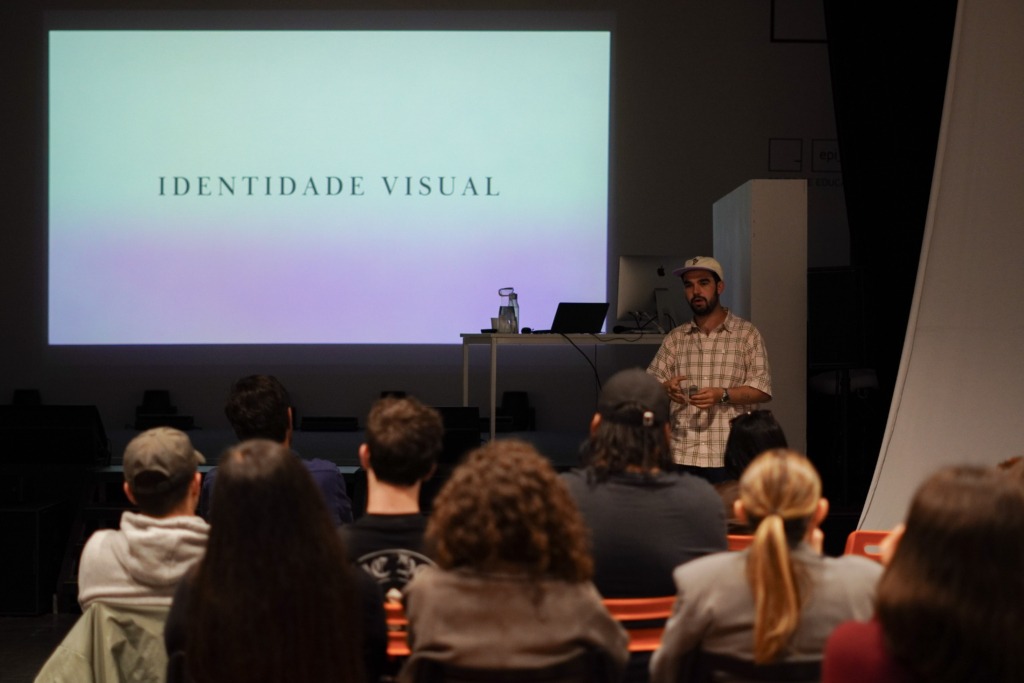
ETIC is also recognized for its creative environment and the proximity between students, teachers and staff. There is a close connection with the professional environment that results in partnerships with companies and institutions. Real briefings and creative challenges with professional positioning are part of the curricular projects. The school regularly promotes the possibility for students to participate in events and festivals where they practice, side by side, with the school team and sometimes with experienced professionals and mentors.
PROGRAMME
Requirements: 240 CATS and English Level B2
Students from other schools whose equivalence can be granted can also enter and attend this 3rd year.
This module encourages you to confirm your individual positions as practitioners working within the diverse field of contemporary photographic practice. Emphasis on independent and critical thinking, decision making and awareness of emerging professional networks will be integral to the successful completion of a portfolio of industry standard exhibition prints and self-published photographic research journal.
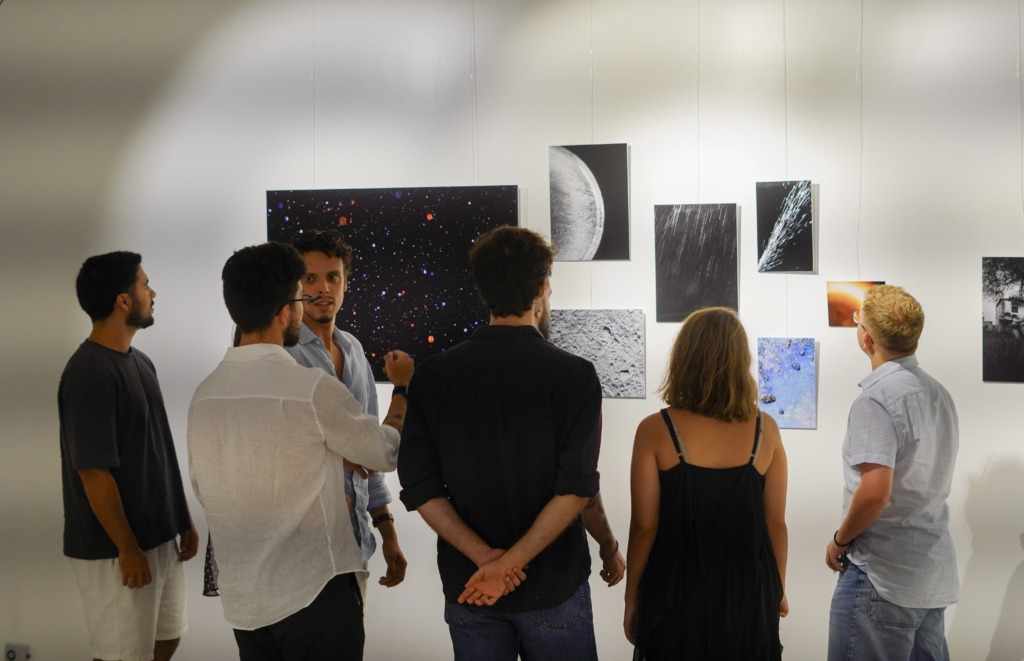
The Final Major Project (FMP) provides students with the opportunity to develop their practice following the outcomes of Contemporary Photographic Practice. Students are expected to demonstrate the ability to work independently and clearly demonstrate their understanding of professional context through their practice. Students will be required to critically engage with their subject, articulating their ideas through a major body of work that will be presented and celebrated in a public Degree Exhibition.
On the course you have acquired a great many skills, many of which will be directly linked to your practice whilst others will be of a transferable nature, those that could be applied to a wide range of creative occupations. And so, on this module you will explore your chosen industry to research and analyse opportunities where these skills could be best used to secure a position, to begin a career in the creative sector.
CERTIFICATION
Solent University recognises the 3rd year of ETIC training and grants an equivalence corresponding to the 3rd year in the British educational system (Level 6 – 120 CATS*).
Certification obtained at ETIC is awarded by the British education system, and ETIC is not a higher education institution.
*CATS: Credit Accreditation Transfer System
TEACHING STAFF
Tiago Casanova
Module Leader
Tiago Casanova
Tiago Casanova studied Architecture at Faculdade de Arquitetura da Universidade do Porto, where he was one of the founders of Scopio – International Photography Magazine in 2010. He was also one of the founders of the XYZ Books Publishing house and Bookshop in 2013, A ILHA (Gallery and Art Space) in 2014, and Estúdio Bulhufas in 2017.
Has been exhibiting his work regularly in solo and group shows since 2006. Besides the work he produces in the context of his artistic investigation and practice, he also develops a professional career as an editor, book-maker, curator and exhibition designer.
In 2012, he was the recipient of the BES Revelação Photography Award and of an Honorable Mention at Novos Talentos Fnac Fotografia. In 2014, his work was mentioned for the best work selection at Plat(t)form – Fotomuseum Winterthur, and in 2015 he won the Jury Award at Festival A3 Bandas in Madrid.
Paulo Petronilho
Pauliana Pimentel
Module Leader
Pauliana Pimentel
Pauliana Valente Pimentel was born in Lisbon in 1975, the city where she still lives but she is working all around the world. As an artist and a freelance photographer she has been producing photo reportages since 1999 for various Portuguese and foreign magazines and newspapers.
In 2005 she took part in the photography course of the Gulbenkian Creativity and Artistic Creation Program. She was member of the [Kameraphoto] collective from 2006 until its extinction in 2014, and a founding member of the “N’WE” collective in 2016. Besides her participation in collectively authored books, she produced her own first book ‘VOL I’ in 2009, published by Pierre Von Kleist and ‘ Caucase, Souvenirs de Voyage’ in 2011 by Gulbenkian Foundation. Filmography: “Diz-se que Portugal é um bom país para se viver”, 40 min, Portugal 2011; “Jovens de Atenas / Youth of Athens”, 13 min. Athens, Greece, 2012; “Entre Nous”, 51 min. Portugal, France, 2014.
In 2015 she won the prize for the best photographic work of the year by the Portuguese Author Society and in 2016 she was nominee for the Novo Banco prize, the most important prize in Portugal for contemporary photography.
She did already several exhibitions in Europe – Portugal, Spain, Italy, England, Germany, Greece, but also outside such as EUA, Turkey, China and Africa (Morocco, and Cape Vert). She was represented for five years by Galeria 3+1 Arte Contemporanea in Chiado and nowadays she is represented by Galeria das Salgadeiras, in Lisbon. Part of her work belongs to private and institutional collections.
CAREER PATHS
Possibilities of jobs include work in commercial, editorial, fashion, portrait, documentary, photojournalism, landscape and fine art photography. Students may also enter related fields, including post-production, museum and galleries, book and journal publication, picture editing.
CONNECTION TO BRANDS, ATELIERS AND OTHER COMPANIES
ETIC is known for its creative environment, for its relationship with creative industry. The teachers on this course have professional backgrounds and are active in the industry, which allows the student to create a network of contacts, access to real briefings and professional opportunities.
ERASMUS+ & INTERNSHIPS
At the end of the programme, and subject to academic performance, students may apply for:
- an international internship through the Erasmus+ Programme;
- a national/international internship or job opportunities for industry placements with partner companies;
Applications are submitted through the Professional Integration Department (estagios@etic.pt).
ETIC provides a digital platform to communicate job offers and employment opportunities from partner companies.
FACILITIES
FACILITIES
ETIC is a school equipped with state-of-the-art technology, tailored to meet the specific demands of each area of study and industry.
– Photography studios equipped with continuous light and electronic flash;
– DSLR and analogue cameras. Medium and large format equipment;
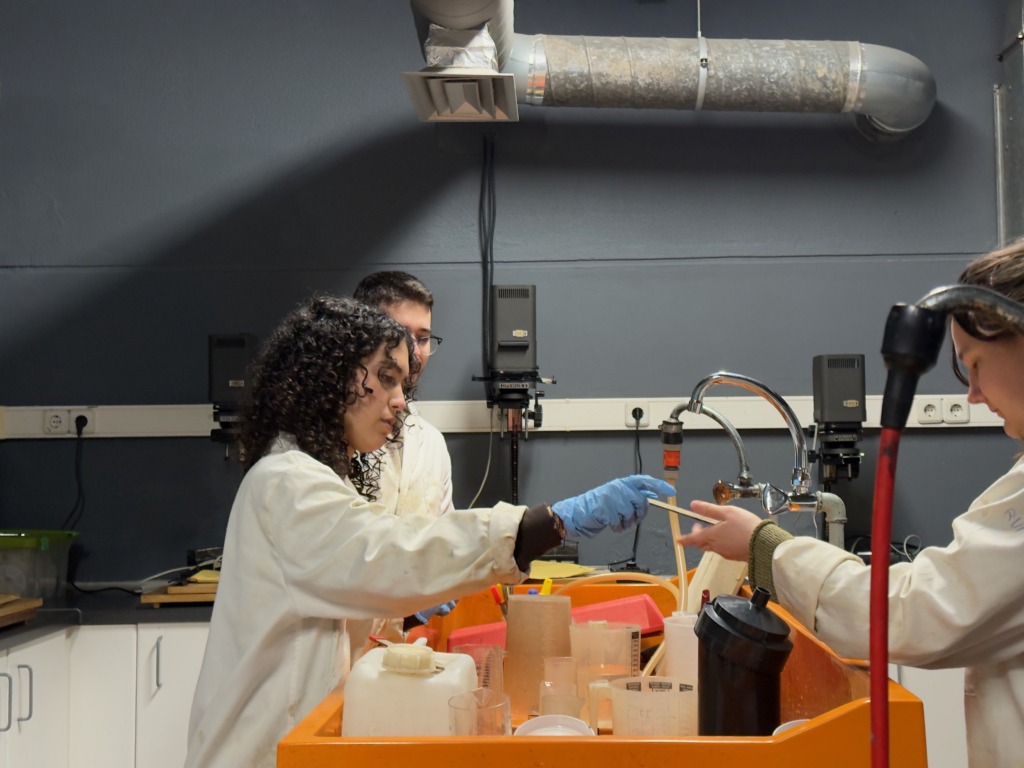
– Analogue and digital laboratory;
– Large format printing and scanning equipment;
– Video and Multimedia Studio, cyclorama and virtual scenery and motion capture system;
– Rooms equipped with individual workstations, iMac and PC.
APPLICATION
The programme is delivered in English. English entry level: B2*
Requirements
- A Pearson BTEC Higher National Diploma, Level 5
- English Test*Online Portfolio or Showreel + CV
- Motivation letter
- Recommendation letter
- Interview with the course leader
All these documents should be delivered in English.
English test can be completed remotely, on the date and time chosen by the candidate.
Choose one of the following:
•IELTS 6.0 (minimum score of 6 in the overall score and writing and 5,5 in Reading, Listening and Speaking)
•TOEFL IBT (minimum score of 80, 20 in each component)
•DUOLINGO (minimum of 115 overall with a minimum of 95 in each component)
*According to CEFR Levels.
Applications UNTIL AUGUST 31st
TUITION FEES

There are several financing programs in different banking institutions: Caixa Geral de Depósitos, Santander, Banco CTT, BPI, among others.
GENERAL TERMS AND CONDITIONS
The opening of each course/class/schedule is subject to a minimum number of registrations. Registration at the desired time is limited to the number of places available.
Teaching is face-to-face and project based. The course program includes classes without a teacher to develop autonomous exercises and design practices. Autonomous or project work is important for the student’s progress in their learning. Teachers can request the development of work outside the established class hours. Classes may occasionally be scheduled outside of established times, for example to respond to projects that require this flexibility, to meet project-specific equipment needs, to respond to exercises carried out in a real context with partners, or for any other reason that supports the better achievement of the program.
Specific technical classes and/or workshops can take place on Saturdays.
The duration of each class may vary depending on its theoretical or practical nature.
The class can be divided into groups for better learning and intensification of the development of projects and subjects.
The curriculum and the list of course teachers may be changed for reasons of pedagogical suitability or for reasons of force majeure.
For more information contact us.
Portfolio





What are the requirements to apply for a course at ETIC?
Applying to ETIC is accessible and flexible. Usually, we consider:
- Certificate with 240 CATS or 120 ECTS
- English test: Duolingo, IELTS or TOEFL (with the required minimum scores from one of the following tests):
- Duolingo (minimum overall score of 115, with at least 95 in each component)
- IELTS 6.0 (minimum overall score of 6.0, with at least 6.0 in Writing and 5.5 in Reading, Listening and Speaking
- TOEFL iBT (minimum overall score of 80, with at least 20 in each component)
- Portfolio
- Motivation letter
- Letter of recommendation
- Interview
- More than formal criteria, we value potential and commitment to learning.
How does the application process work?
- Start your online application (Apply button) via the course page
- Application process starts with submission of documents
- Interview with the Course Coordinator (for external applicants)
- Submission of administrative documents to ETIC
- Final decision and confirmation of place
Are there specific application deadlines?
Yes, the application phase ends on 31st of August 2026.
Early application is recommended due to high demand and a maximum class size of 18 students.
What types of courses does ETIC offer?
International Certification Courses – lasting 2 or 3 years, allowing you to obtain a professionally recognised qualification at both global and academic level
Annual National Certification Courses – lasting 1 academic year, providing training that prepares you for a future profession, recognised within the industry
Semester-based National Certification Courses – lasting one semester, ideal for those seeking certified training to explore a new career path
Specialisations – certified training lasting one semester, for those who already have some knowledge and wish to deepen their expertise
Workshops – highly specific short-term training, up to a maximum of 40 hours
Tailor-made training – customised training plans
Are classes more practical or theoretical?
The methodology is highly practical, based on a “learning by doing” approach. This involves a strong practical component, sometimes in real work environments, guided by professionals actively working in the industry. The third year requires a high level of student autonomy.
Is knowledge of English required to study at ETIC?
Students wishing to enter the third year of international certification courses must provide proof of English proficiency at B2 level by presenting one of the following:
- Duolingo (minimum overall score of 115, with at least 95 in each component)
- IELTS 6.0 (minimum overall score of 6.0, with at least 6.0 in Writing and 5.5 in Reading, Listening and Speaking)
- TOEFL iBT (minimum overall score of 80, with at least 20 in each component)
Does ETIC support career integration?
Yes. The school has a Professional Integration Office which:
- Supports CV and portfolio development
- Shares internal job opportunities
- Establishes partnerships with companies and studios
Which companies recruit ETIC students?
Primarily creative agencies, audiovisual production companies, design studios, fashion companies, video game studios, music and technology companies, among many others—some of which have partnerships with ETIC.
Do students find jobs easily?
Employability rates are high in creative and technological fields, thanks to the strong practical component and the portfolio developed.
ERASMUS+ Programme
ETIC offers a mobility programme that allows selected final-year students to undertake internships in various European countries.
Access to funding is granted through an application process, with selection based on project quality and academic performance.
Are ETIC courses recognised?
Internationally, ETIC is accredited by PEARSON BTEC, awarding a Level 5 qualification (240 CATS) upon completion of two-year courses.
Solent University recognises ETIC’s third year of study and awards equivalence to a Level 6 qualification (120 CATS) in the UK.
CATS: Credit Accumulation and Transfer Scheme
What are the tuition fees?
Fees vary by course and include:
- Application fee
- Enrolment fee
- Annual tuition fee
Can I pay in instalments?
Yes, we offer several flexible payment options.
Does ETIC offer scholarships?
Yes:
- Internal merit-based scholarships
- Partnership scholarships, Zona II, Sara Carreira Scholarship, Vo’Arte Scholarship
What resources does ETIC offer?
- TV studios and OB Van (outside broadcast vehicle)
- Design laboratories
- Sound and music studios
- Fashion workshops
- Coworking spaces
Is there any support for international students?
Yes. During the application process and following acceptance, students of non-Portuguese nationality (or those residing outside Portugal) will be supported by the International Student Office.
The aim is to guide and assist international students throughout their integration, particularly in relation to the “Life at ETIC and in Lisbon” experience. This includes recommendations on accommodation, transport, cultural programmes, and social and cultural integration.
Contacts: international@etic.pt / (+351) 213 942 140
Where is the school located?
In the centre of Lisbon, near Cais do Sodré, at Rua D. Luís I, numbers 6 and 20, with easy access to public transport (metro, bus and train just a few minutes away).
Can students use the studios for personal projects?
Yes, subject to booking and internal approval.
Are final projects presented publicly?
Yes, through exhibitions, film screenings, fashion shows, showcases and digital portfolios.